




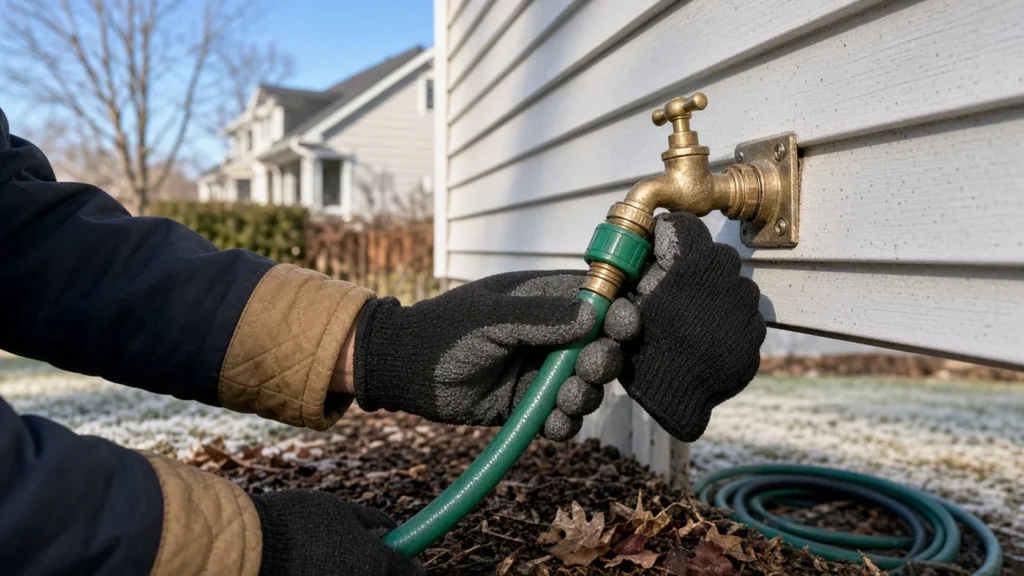
Most frozen pipe prevention happens on an ordinary fall afternoon, well before the forecast turns serious. Once a hard freeze arrives, hoses are frozen to the spigot, the sprinklers still hold water and nobody remembers where the main shutoff is.
This checklist is built for the window between the end of yard season and the first deep cold on Long Island. Check off what you can handle yourself and note anything that needs a plumber.
Start This Checklist Before the First Hard Freeze
Treat this as a once-a-year walk-through, with a short repeat whenever a cold snap is forecast. Pick a dry day, bring a flashlight and a notepad and plan to visit the yard, garage, basement or crawl space and any attic access.
As you go, write down what you finished, what you could not reach and what looked worn, damp or unfamiliar. That list makes a service call faster if you need one.
This post covers preparation. If a pipe in your home has already frozen or burst, our guide to burst pipes this winter explains the warning signs and what to do first.
Outdoor Faucets, Hoses, and Shutoffs
The American Red Cross lists outdoor hose bibs among the pipes most exposed to severe cold. Give each one the same short routine:
- Disconnect every hose. Drain it, coil it and store it out of the weather.
- Close the indoor valve that feeds the faucet, if your home has one. It is often on a nearby basement ceiling or close to the main shutoff.
- Open the outdoor faucet to let it drain. The Red Cross advises leaving that outside valve open so any water left in the pipe has room to expand.
- Mark any faucet you could not shut off from inside. That is a question for a plumber, not a reason to skip the faucet.
Some homes have frost-free outdoor faucets, which shut the water off farther inside the wall. Home inspection guidance still recommends removing the hose, because an attached hose can keep the faucet from draining. If you are not sure which type you have, treat it as a standard faucet and winterize it anyway.
Sprinklers and Irrigation
An in-ground sprinkler system can hold water all winter if it is not prepared. The Red Cross recommends draining sprinkler supply lines by following the manufacturer's or installer's directions, and it advises against adding antifreeze to those lines unless directed.
Here is the part a homeowner can usually handle:
- Run each zone one last time and note any broken or leaking heads.
- Find the shutoff valve that supplies the irrigation system.
- Turn the irrigation controller off once the system is prepared, so it does not try to run in January.
Utah State University Extension notes that some systems drain through valves, while others need water forced out with pressurized air. University of Minnesota turfgrass specialists recommend leaving the compressed air blowout to a certified irrigation professional rather than a homeowner with a shop compressor.
If you cannot tell which valve isolates the irrigation line, or the backflow device near the house looks damaged, ask a plumber to check the connection before the system is shut down.
Garage, Crawl Space, Attic, and Exterior-Wall Pipes
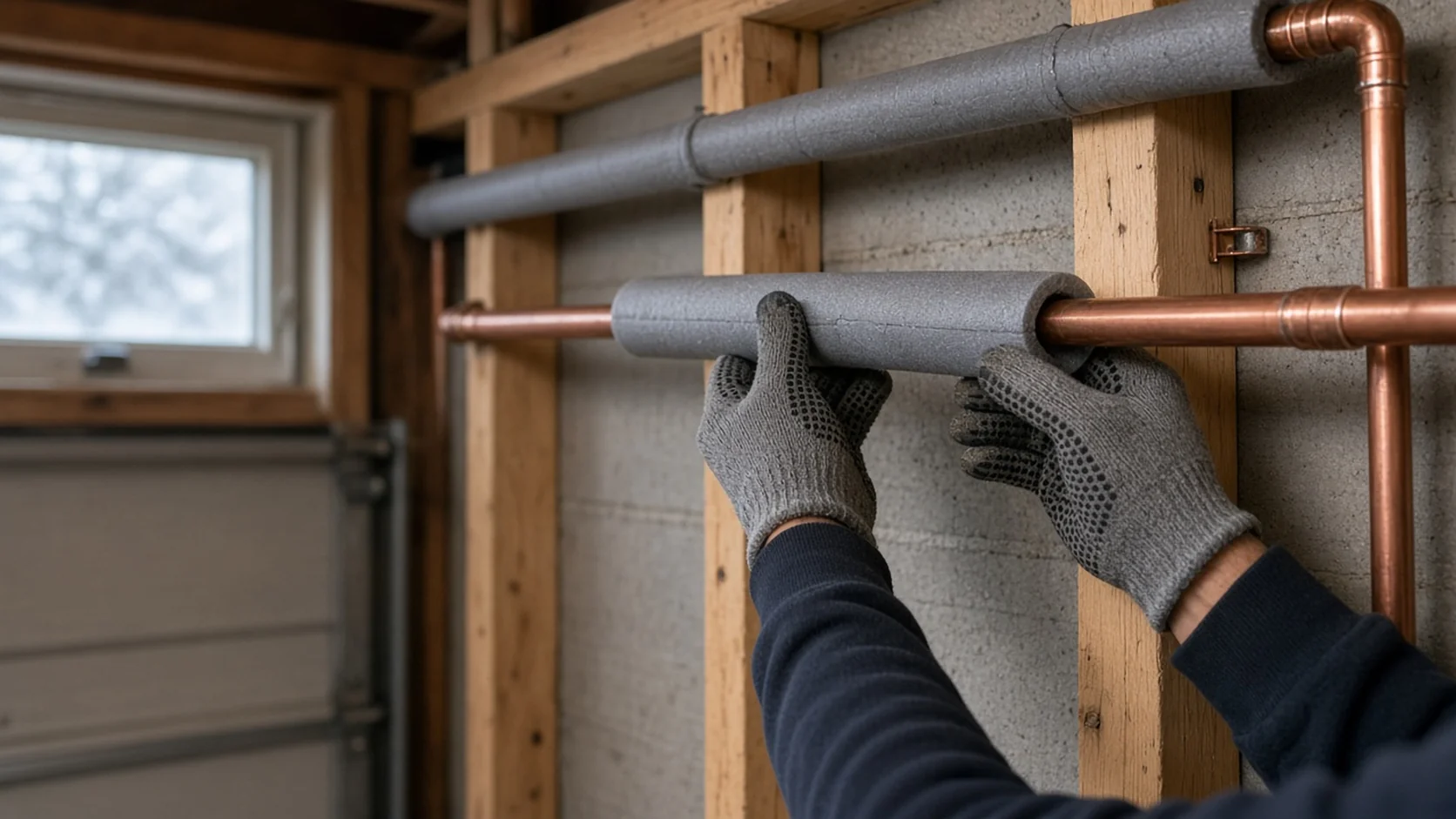
Next, follow the water lines through the spaces you rarely heat. The Red Cross points to basements, crawl spaces, attics, garages and pipes along poorly insulated exterior walls as freeze-prone locations.
Use this walk-through checklist:
- Garage: Look for supply lines on walls or ceilings, especially near the overhead door. Keep that door closed in cold weather if water lines run through the space.
- Crawl space: Check whether pipe sleeves are intact and whether any vents or openings let cold air blow directly across the lines.
- Attic: Note any water lines that run above the insulation rather than beneath it.
- Exterior walls: Note which sinks sit on outside walls and which rooms have had cold-weather trouble before.
Foam pipe sleeves suit accessible runs. The Red Cross also mentions UL-listed heat tape or heat cable for exposed pipes. Follow the product instructions, and get professional advice before using heat cable on an unfamiliar line.
For long runs, tight spaces or pipes you can see but cannot reach, The Drip Detective offers frozen pipe services. Its plumbers can inspect problem areas and recommend insulation or other protective measures.
Find and Test the Main Shutoff
If a pipe does give way, the main shutoff is how you stop the water. The Regional Water Providers Consortium says the valve is typically in the basement, garage or crawl space, or outside by the foundation. Some homes do not have one at all.
- Locate it. Follow the main line from where it enters the house.
- Clear the path. The Consortium recommends keeping the valve accessible all year, so move stored boxes away from it.
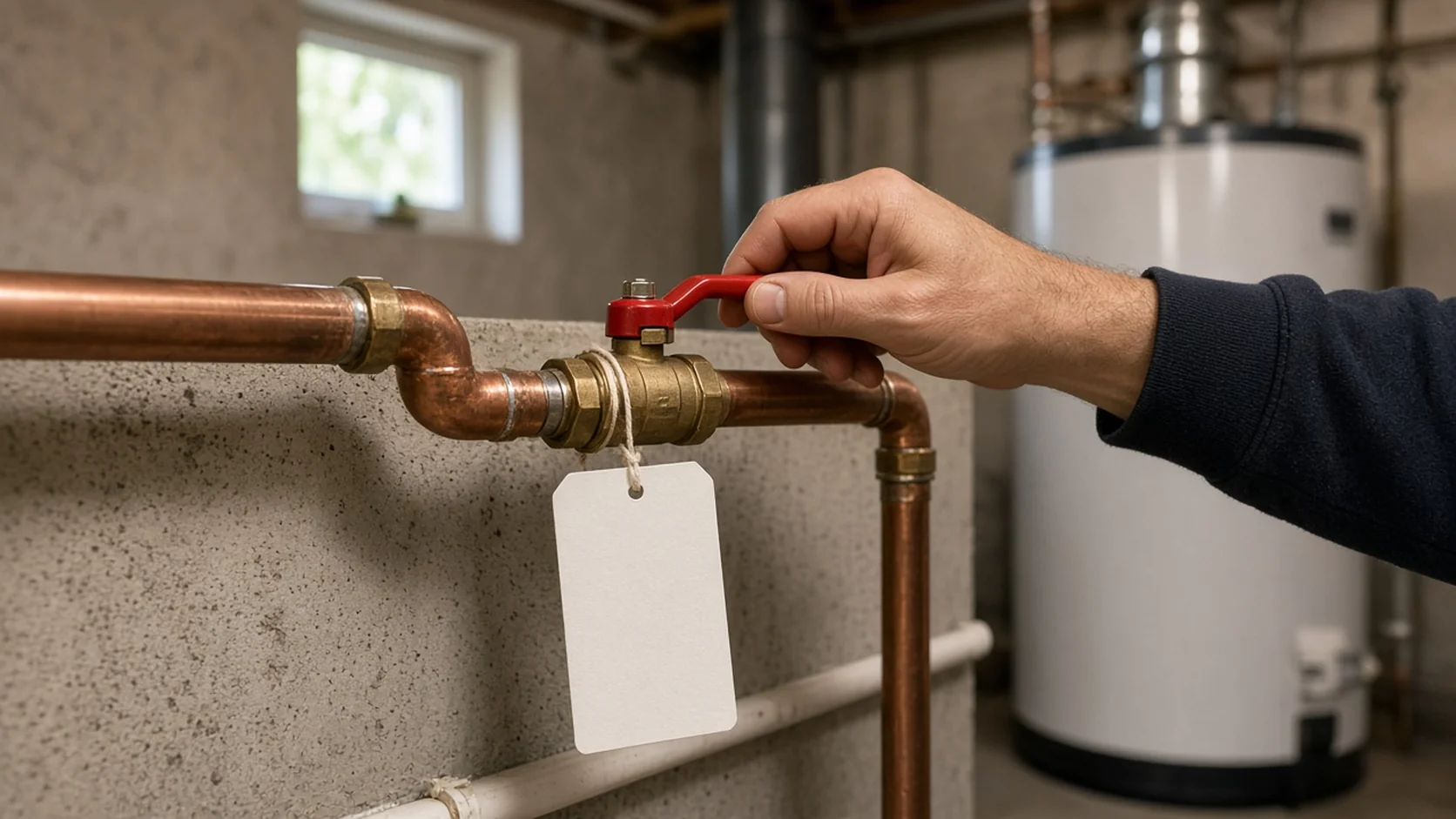
- Identify the type. A wheel-style gate valve turns clockwise until snug. A lever-style ball valve is closed when the handle sits perpendicular to the pipe.
- Give it a gentle trial turn. Then open it fully again. If the valve appears stuck, do not force it. The Consortium suggests checking with a plumber.
- Tag it and teach it. Hang a tag on the valve and show every adult in the house how to close it. The Consortium calls this especially important during cold weather.
Thermostat, Cabinet Doors, and Leaving Town
Some items wait until the cold arrives. Keep them on a card by the thermostat so anyone in the house can follow them.
- Hold one setting through cold nights. During very cold weather, the Red Cross recommends keeping the same temperature day and night instead of setting it back overnight.
- Open the right cabinet doors. Prioritize kitchen and bath sink cabinets on exterior walls so room air can reach the pipes. Move cleaning products out of children's reach before you leave those doors open.
- Plan before you travel. If you will be away during cold weather, the Red Cross advises leaving the heat on at no lower than 55°F.
Before a winter trip, make sure someone you trust knows where the main shutoff is and can check on the house. If you are considering closing the main valve while away, ask a plumber whether that suits your home's heating and plumbing.
Water Heater, Boiler, Heating, and Sump Pump Checks
Winter puts steady demand on the equipment that heats your home and water. A quick look now can turn up problems early.
- Water heater: Look for moisture around the tank and its connections, and note whether hot water has become inconsistent. The Drip Detective handles water heater installation and repair, plus service for tankless water heaters.
- Boiler: Unusual noises, leaks, pressure problems or uneven heat are reasons to schedule service for boilers before you depend on the system every day.
- Heating system: Frequent cycling, unexpected shutdowns or rooms that never warm up call for heating repair. Steady heat helps protect the pipes on this checklist. Ready.gov also recommends testing smoke alarms and carbon monoxide detectors as part of winter preparation.
- Sump pump: If your home has one, test it now. Pour water into the pit and confirm the pump turns on and moves the water out. Look at where the discharge line exits so you know it is not buried or blocked.
If You're Remodeling This Winter, Add These Items
A kitchen or bathroom project scheduled for the colder months adds a few lines. Cover them before demolition starts:
- Confirm every outdoor faucet is shut off and drained before crews start coming and going.
- Show the project lead where the main shutoff is and confirm it works.
- Ask the team to note any exposed or exterior-wall water lines they find while walls or floors are open.
- Agree on how the work area will be kept heated if doors or walls are open during cold weather.
For deeper planning on pipe routes and wall protection during a remodel, see our article on burst pipes this winter. LPS Direct handles kitchen remodeling and bathroom remodeling across Long Island.
Frequently Asked Questions
Who should I call on Long Island if a pipe freezes or bursts after a hard freeze?
Call The Drip Detective, the LPS Direct plumbing team, at 631-773-1733 in Suffolk or 516-962-6625 in Nassau. Its emergency plumbing services cover leaking and burst pipes for homeowners throughout Long Island.
If a pipe has frozen but not broken, the frozen pipe services team can work out a safe approach and check the plumbing for damage. When you call, describe where the problem is and whether you could close the main shutoff.
Should I check or service my sump pump before winter, and who installs sump pumps on Long Island?
Yes. A short test before winter shows whether the pump starts and clears water while there is still time to repair or replace it.
InterNACHI, the home inspectors' association, describes pouring water into the pit to confirm the pump activates and expels the water, and recommends professional help if it does not start. The Drip Detective provides sump pump installation and repair on Long Island, including inspecting existing systems, diagnosing pumps that are not working properly and installing new systems.
What should I check on my water heater before winter, and who installs water heaters on Long Island?
Check for moisture at the base of the unit and around its pipe connections, and pay attention to any change in how reliably it delivers hot water. Those observations are worth sharing with a plumber before the coldest weeks.
The Drip Detective installs and repairs water heaters on Long Island and evaluates an existing unit's condition, age and performance before recommending repair or replacement. For a tankless model, the team can review household hot water demand and existing plumbing to judge whether it is a good fit.
Where should I look for the main water shutoff, and why test it before the first freeze?
Start in the basement, garage or crawl space near where the water line enters the house, and check outside near the foundation if you do not find it indoors. Testing it before the first freeze shows whether the valve will move when you need it.
Valves can stick, and the middle of a leak is the worst time to find out. Turn it gently, open it fully again and call a plumber if it will not move. Then show every adult in the household how to close it.
Call The Drip Detective Before the Next Hard Freeze
If your walk-through turned up pipes you cannot protect, a shutoff that will not turn or a pipe that has already frozen, contact The Drip Detective at 631-773-1733 for Suffolk or 516-962-6625 for Nassau. Ask about frozen pipe services for vulnerable plumbing, or emergency plumbing services if water is already escaping.


