


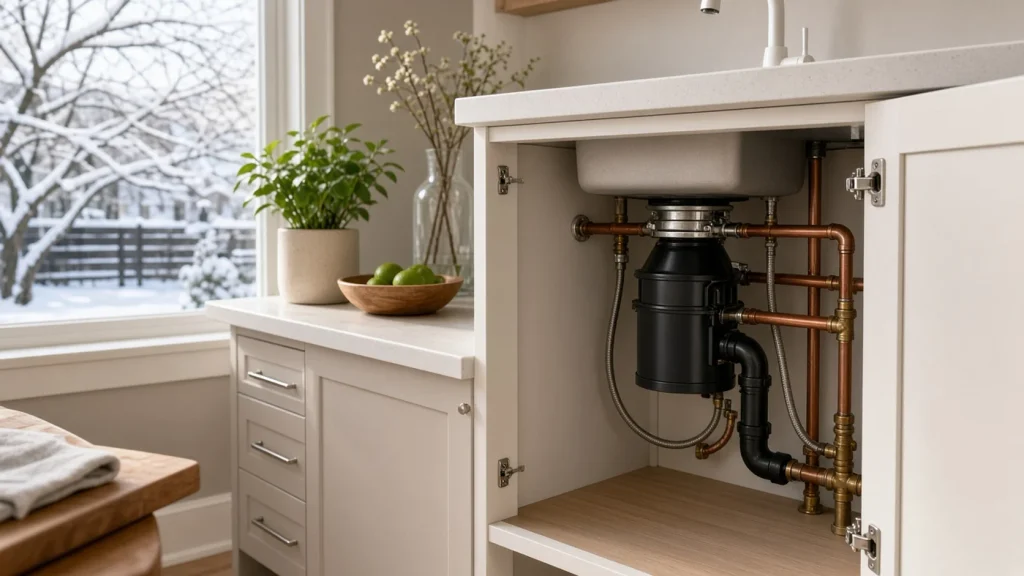
A kitchen or bathroom remodel should do more than give you new cabinets, tile and fixtures. It is also a chance to look at the plumbing serving the room and ask whether it is protected when temperatures fall.
For Long Island homeowners planning an update, burst pipes belong in that conversation. Water expands when it freezes, putting pressure on the pipe around it. Both metal and plastic pipes can break. Plumbing in unheated spaces or against poorly insulated exterior walls deserves particular attention.
That does not mean every kitchen or bath needs new pipes. It means winter protection should be part of the planning, not something considered after the new finishes are installed. Start with the vulnerable areas, understand what to do in an emergency and use any planned remodeling work to address the conditions that allow pipes to freeze.
Why Cold Weather Can Lead to Burst Pipes
The problem begins with freezing water, not simply the age of the house. The American Red Cross identifies exposed outdoor plumbing, water lines in unheated areas and pipes against exterior walls with little or no insulation as frequent freezing locations.
Inside a home, that can include a garage, attic, crawl space or unheated basement. Kitchen and bathroom cabinets also warrant a look, especially when the plumbing sits along an exterior wall.
A comfortable room is not a reason to skip that check. Look beyond the room itself to the pipe route and the space surrounding it. For a Long Island kitchen or bath project, ask the remodeling team to identify any water lines running through unheated areas before settling on the scope of work.
The goal is not to replace plumbing simply because it is old. Start with its location, exposure and condition, then decide what protection or repair is appropriate.
A Trickle From the Faucet Is a Reason to Act
During freezing weather, a faucet that produces only a trickle may signal a frozen pipe. The Red Cross recommends checking other faucets too, because more than one pipe may be affected.
Do not assume reduced flow means the pipe has already burst. It is a warning to investigate promptly, particularly if that fixture has had trouble during previous cold spells.
Never try to thaw a pipe with a torch or another open flame. If the frozen section cannot be found, is inaccessible or will not thaw, call a plumber. Leave inaccessible plumbing to a professional rather than opening a finished wall or applying heat without knowing what is behind it.
The Drip Detective provides frozen pipe services, including identifying vulnerable plumbing, addressing freezing problems and repairing pipes damaged by cold weather.
If a Pipe Bursts, Put Safety Before Cleanup
If water is escaping from a broken pipe, focus on stopping the supply safely and getting help. Save decisions about replacement cabinets or tile for later.
- Stay clear of electrical hazards. Do not enter standing water to reach a breaker panel, and never operate electrical tools or appliances while standing in water. If electrical equipment is wet or near water, have an electrician address the hazard. Power should not be restored until affected equipment has been inspected by a qualified electrician.
- Shut off the home's water supply if it is safe to reach. Use the emergency main shutoff. If you cannot locate or operate it, contact a plumber or your water provider for help. Do not make reaching the valve more important than your safety.
- Call for plumbing repair. Describe where water is escaping, whether the supply is off and which rooms are affected. The Drip Detective's emergency plumbing services include leaking and burst pipes.
- Document the damage when safe. Take photographs for your records and contact your insurer about the claim process. Do not assume a particular repair or replacement is covered.
- Arrange prompt drying. EPA guidance emphasizes drying water-damaged areas and items within 24 to 48 hours to help prevent mold growth. That is a reason to act promptly, not a reason to wait two days before calling for help.
If the source of escaping water is uncertain, leak detection and repair can help establish what needs attention. A pipe repair and the drying of affected materials are separate parts of getting the home ready for finish repairs.
Build Winter Protection Into the Remodeling Plan
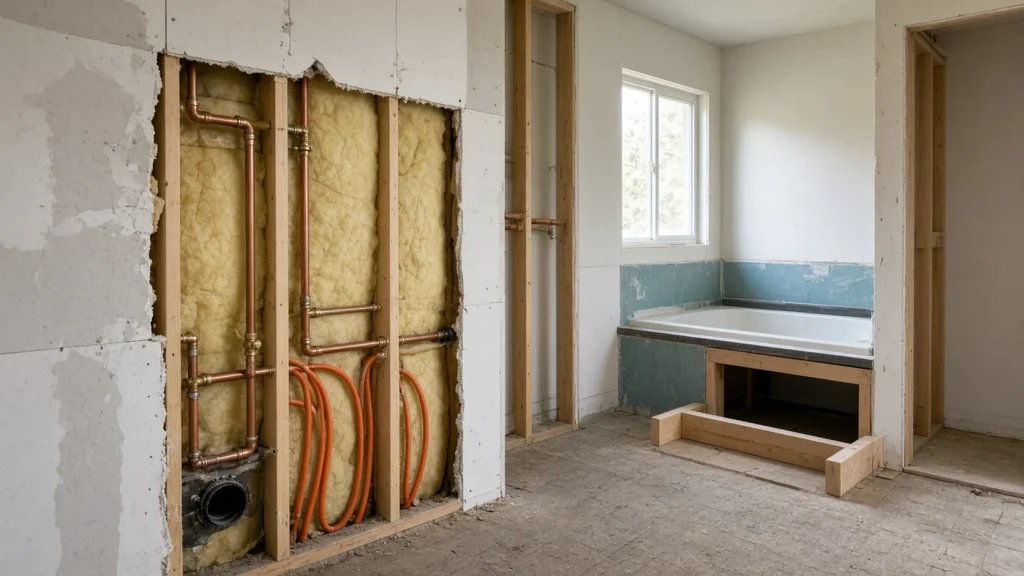
If your planned project includes opening walls or exposing water lines, make that stage a deliberate review point. Ask what should be inspected, insulated or changed before the work is concealed again.
Review the Pipe Route, Not Just the New Fixture
A new sink or shower is not a substitute for protecting the water lines serving it. Ask whether exposed pipes could be relocated to a more protected location. The Red Cross lists relocating exposed pipes as one way to increase protection from freezing.
Where pipes must remain in exterior walls, U.S. Department of Energy guidance calls for pipe insulation, suitable cavity insulation behind the pipes and air sealing to keep cold air from flowing around them. These details should be discussed together rather than treating a pipe sleeve as the whole plan.
For an older home, bring any history of freezing to the consultation. Note the fixture involved and the conditions when it happened. Ask the team to evaluate that specific area rather than assuming every pipe needs replacement.
Make Kitchen Planning About More Than Cabinet Doors
During kitchen remodeling, include a winter plumbing review alongside the cabinet and fixture selections. If the sink is staying on an exterior wall, ask how the supply lines and surrounding wall cavity will be protected.
If you are considering a different sink location, ask the team to evaluate winter exposure as part of that decision. Keep the conversation focused on protecting the proposed pipe route, not moving a fixture just for the sake of moving it.
Also ask the plumber to show you the home's main shutoff and explain how to use it. The Regional Water Providers Consortium recommends keeping that valve accessible throughout the year. Include access in the project discussion before storage and finishes are finalized.
Give Bathroom Plumbing the Same Attention
A bathroom remodeling plan should include the water lines serving the vanity, tub and shower, not only the visible fittings. If the project exposes a plumbing wall, ask whether the pipe location, insulation and air sealing need attention before tile or drywall goes back.
Bring up any bathroom fixture that has lost flow during a previous freeze. Treat it as a specific planning concern to investigate, not proof that all the bathroom plumbing is defective.
LPS Direct offers kitchen and bathroom remodeling, with design and construction support. Make protecting vulnerable plumbing one of the goals you bring to the project consultation, alongside appearance, storage and everyday function.
Protect the Home While You Plan the Project
You do not need to wait for a full remodel to take basic precautions. The Red Cross recommends checking both hot and cold water lines in unheated areas and using products designed for pipe insulation where appropriate.
During very cold weather, open kitchen and bathroom cabinet doors so warmer air can circulate around plumbing. Move cleaners and other household chemicals out of children's reach first. Keep garage doors closed if water supply lines run through the garage.
The Red Cross also recommends maintaining the same thermostat setting day and night during very cold weather. If you leave home during cold weather, keep the heat on at no lower than 55°F. Do not treat that minimum as a replacement for checking vulnerable plumbing.
For a faucet served by exposed pipes, the Red Cross recommends allowing cold water to drip during very cold weather. Ask your plumber which fixtures need that precaution in your home, while making a longer-term plan for exposed piping.
Outdoor preparations matter too. Remove, drain and store garden hoses, and follow the appropriate instructions for draining outdoor supply lines. Discuss any unfamiliar valves or winterization steps with a plumber rather than guessing.
If Water Damage Leads to Remodeling, Address the Cause First
A burst pipe may bring an unplanned kitchen or bathroom project forward. Before choosing replacement finishes, establish how the pipe will be repaired and how the affected area will be dried.
EPA recommends fixing plumbing leaks as soon as possible and drying items completely. It also advises against painting or caulking over moldy surfaces. Ask the restoration and remodeling professionals what needs to be dried, cleaned or replaced before rebuilding starts.
Then return to the winter question: what allowed that pipe to freeze, and what should change before the area is closed? Ask for the repair and any protective work to be explained separately from optional design upgrades. You can make the necessary repair without assuming every improvement belongs in the same project.
Frequently Asked Questions
Should I keep my heat on if I leave for a winter remodeling project?
Yes. The American Red Cross recommends leaving the heat on at no lower than 55°F when you are away during cold weather.
Tell your contractor if the house will be unoccupied and discuss protection for any water lines in unheated areas. The thermostat setting is one precaution. It does not replace reviewing exposed plumbing or planning for the specific conditions in the work area.
Should both hot and cold water lines be checked for winter protection?
Yes. The Red Cross recommends insulating both hot and cold water pipes located in unheated areas.
When plumbing is exposed during a kitchen or bath project, ask the team to review both supply lines. For piping in an exterior wall, discuss the pipe insulation, insulation behind the pipes and air sealing together, following the guidance for that assembly.
Can replacing a bathroom faucet solve a recurring freezing problem?
Do not assume so. A recurring winter flow problem calls for evaluating the water line and its exposure, not simply choosing a different faucet.
A new fixture can be part of a bathroom update, but the winter protection plan should address vulnerable piping. Ask whether the appropriate response is insulation, air sealing, a more protected pipe route or another recommendation based on an inspection.
What should I ask to see before a remodeled plumbing wall is closed?
Ask the team to explain the pipe route and any insulation or air-sealing work included in your project.
Where pipes remain in exterior walls, Department of Energy guidance calls for pipe insulation, suitable cavity insulation behind the pipes and sealing the cavity against cold airflow. Review how the agreed work addresses those details before the wall receives its finished surface.
Plan a Better Room and Better Winter Protection
If a pipe has burst, contact The Drip Detective at 631-773-1733 for Suffolk or 516-962-6625 for Nassau. Explain the situation and request plumbing service.


