




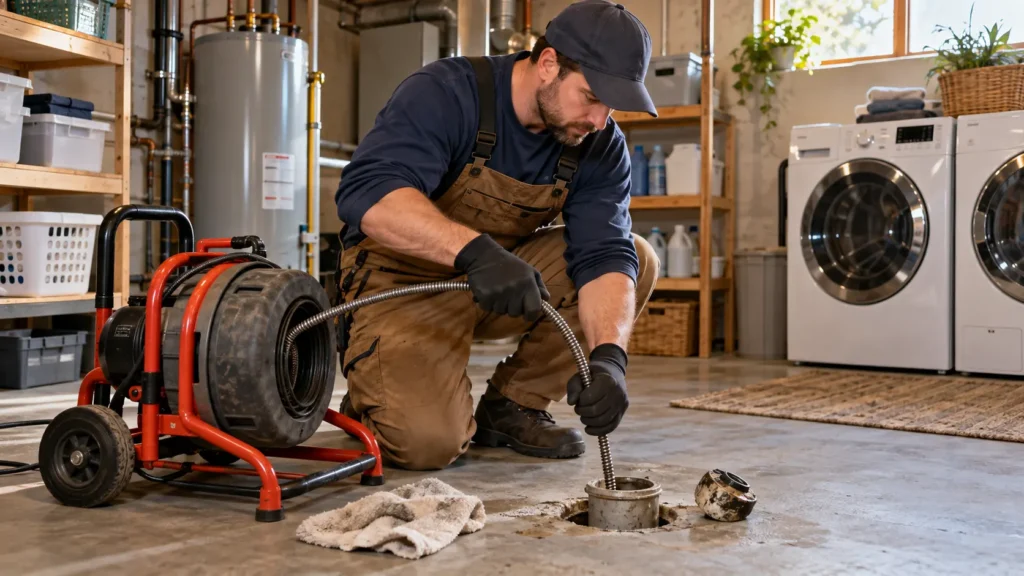
You had the sewer line snaked, the drains started flowing again, and you thought the problem was solved. Then a few weeks or months later, the same slow drains, gurgling toilets, or backup starts all over again. When a sewer line repeatedly clogs after being snaked, the new blockage may not really be a new problem. Something inside the sewer line may be causing waste and debris to collect in the same place again and again.
Snaking can be very effective for clearing certain blockages and restoring flow. But if the underlying problem involves heavy buildup, tree roots, damaged pipe, or another condition within the sewer line, simply opening the blockage may not prevent it from returning. Understanding why the clog keeps coming back is the key to determining what should happen next.
Why Can a Sewer Clog Come Back After Snaking?
A drain snake, also called an auger or sewer cable, uses a rotating cable and cutting attachment to break through or remove an obstruction. For many ordinary clogs, that may be all that is needed. A recurring problem is different. The line may be open enough for water and waste to pass after it is snaked, while conditions that contributed to the original blockage remain farther inside the pipe. Once more debris collects there, the line begins slowing down again. If you find yourself scheduling another sewer cleaning for the same problem, it is worth asking a different question: Why does this particular section of sewer line keep clogging? The answer generally requires looking beyond the blockage itself.
Buildup May Still Be Narrowing the Pipe
Over time, grease, soap residue, sludge, mineral deposits, and other material can accumulate along sewer and drain pipe walls. Picture a pipe that originally had its full inside diameter available for water and waste to travel through. As material builds up around the sides, that usable opening becomes smaller. A snake may create enough of an opening for the line to begin flowing normally again without necessarily removing everything that has accumulated along the pipe walls. As a result, the remaining material provides a place for new debris to catch. The line gradually narrows again, and another clog develops.
When substantial buildup is responsible for repeated problems, hydro-jetting may be considered. High-pressure water can remove certain types of buildup from the interior surface of a sewer or drain line rather than simply reopening an obstruction. The condition of the pipe needs to be considered first, however. Cleaning methods should be chosen based on what is happening inside the line, not simply because the drain has clogged more than once.
Tree Roots May Be Growing Back Into the Sewer Line
Tree roots are another reason a sewer line can repeatedly clog. Roots naturally grow toward sources of moisture. If an underground sewer pipe has a crack, loose connection, deteriorated joint, or other opening, small roots can sometimes enter the line. Once inside, those roots can continue growing. Waste, toilet paper, and other material then become caught in the root mass, eventually restricting the line.
Snaking may cut through enough of the roots to restore drainage, but that does not eliminate the opening in the sewer pipe that allowed them to enter. Remaining roots can continue growing, and additional roots may find their way inside. That is why a sewer line affected by root intrusion can develop a pattern of recurring clogs. If roots repeatedly appear in the same section of line, the longer-term solution may eventually involve repairing the damaged area rather than repeatedly clearing the blockage.
The Sewer Pipe May Have a Low Spot
Not every recurring sewer clog is caused by something growing or accumulating inside the pipe. Sometimes the shape or position of the sewer line itself is contributing to the problem. An underground sewer pipe can settle over time. If part of the pipe drops lower than the surrounding sections, it creates what plumbers often call a belly or low spot. Wastewater may move more slowly through that area, allowing solids and debris to collect. Snaking can remove the immediate obstruction, but it cannot change the slope of the pipe. If the low spot remains, material can begin accumulating again after the line has been cleared. This is one reason repeated sewer clogs should not automatically be treated as cleaning problems.
A Damaged Sewer Line Can Keep Catching Debris
Cracks, deteriorating pipe walls, separated joints, misaligned sections, or partially collapsed pipe can all interfere with the normal movement of waste through a sewer line. An irregular surface inside the pipe creates places where material can catch. The blockage may be removed during snaking, but the damaged section remains. Depending on the condition of the pipe, the problem may become increasingly frequent. A line that once clogged every few years might eventually begin clogging several times in one year. When structural damage is responsible, additional cleaning cannot correct the damaged pipe itself. A targeted sewer line repair may be necessary to address the source of the recurring problem.
How Do You Know What Is Causing the Clog?
When the same sewer line repeatedly backs up, seeing inside the pipe becomes much more useful than continuing to guess. A sewer line camera inspection allows a plumbing professional to examine accessible portions of the line from the inside. Depending on the condition and visibility within the pipe, an inspection may reveal:
- Tree root intrusion
- Heavy buildup or deposits
- Cracked pipe
- Separated or offset joints
- Sagging sections of sewer line
- Deteriorated piping
- Foreign objects
- Areas where waste repeatedly collects
The goal is not simply to confirm that there is another clog. You already know that. The important information is why the sewer keeps clogging in the first place. Once that is known, it becomes much easier to choose the appropriate solution.
Does a Recurring Clog Mean You Need a New Sewer Line?
Not necessarily. A sewer line that clogs repeatedly does not automatically need to be replaced. If the pipe itself is structurally sound and the problem is heavy accumulation inside it, professional cleaning may be enough to restore better flow. If roots are entering through a limited damaged area, a repair may be possible.
More extensive deterioration, significant collapse, or other widespread structural problems could make sewer line replacement a more practical long-term solution. This is precisely why diagnosis matters. Replacing a sewer line without confirming that it needs replacement can mean unnecessary work. Continually cleaning a badly damaged line can mean repeatedly paying to treat the symptom. The right solution depends on what the pipe is telling you.
When Should You Stop Having the Line Snaked?
There is no specific number of times that applies to every sewer system. A single clog does not necessarily indicate a larger problem. Home sewer lines occasionally clog for ordinary reasons. A pattern is more concerning. Pay attention if:
- The same sewer line has been cleared several times.
- The clog returns soon after service.
- Several drains in the house begin slowing at the same time.
- Toilets gurgle when other plumbing fixtures are used.
- Water backs up through a basement or lower-level drain.
- The interval between sewer clogs keeps getting shorter.
These symptoms may suggest that you are dealing with more than an isolated blockage. At that point, repeatedly reopening the line without determining why it keeps closing again may only postpone the next backup.
Don't Just Clear the Next Clog. Find Out Why It Keeps Happening.
If your sewer line was recently snaked and is already causing problems again, the most useful next step may not be another round of the exact same treatment. A recurring sewer clog is information. It tells you there may be something inside the pipe, or something wrong with the pipe itself, that continues creating the same conditions.
The Drip Detective provides sewer and drain services to help identify and address sewer problems based on their underlying cause. Depending on what is found, that could mean professional cleaning, camera inspection, root removal, sewer repair, or another appropriate solution. Finding the reason the sewer keeps clogging can help you get out of the cycle of clearing the same line over and over again.


