




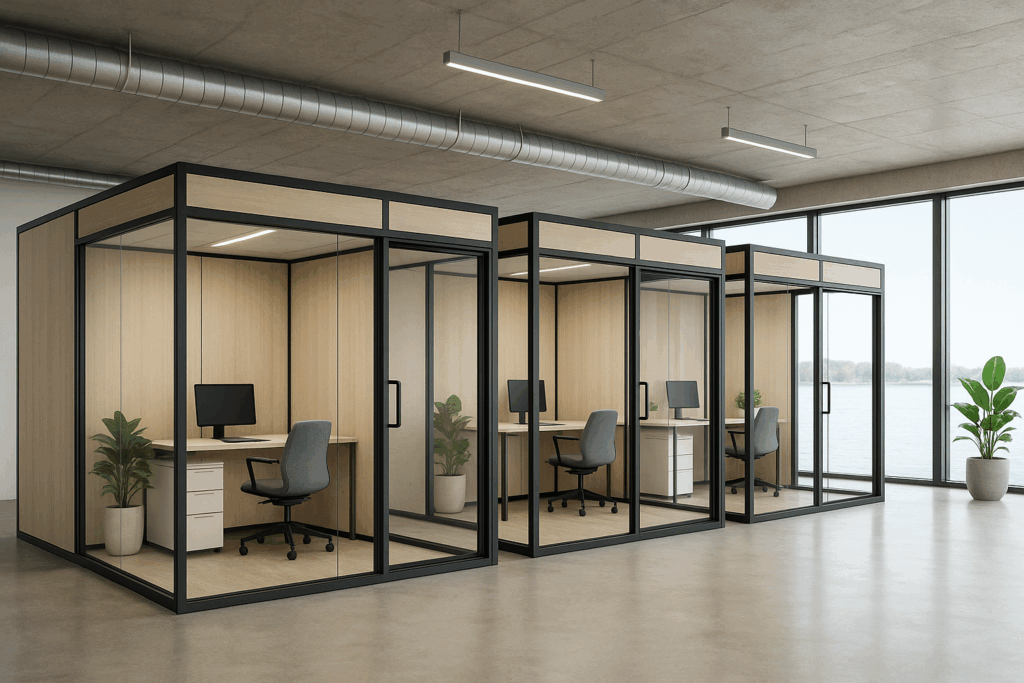
Across Long Island, office design is undergoing a quiet revolution. From Melville to Mineola, business owners are rethinking the traditional office layout and investing in modular, flexible workspaces that adapt to the way people actually work today.
The days of static walls and fixed cubicles are giving way to modular office renovations — layouts built to change, expand, or contract as your business evolves. Whether you manage a growing team in Nassau County or are optimizing space in a Suffolk County professional building, modular renovation offers a smarter, more future-proof way to design your workspace.
What Is a Modular or Flexible Workspace?
A modular office is designed around reconfigurable components: movable walls, modular furniture systems, and multipurpose rooms that can be adjusted without demolition. Think of it as a workspace that evolves with your business — one that can shift from open collaboration areas to private meeting rooms in a single afternoon.
For Long Island companies navigating hybrid work schedules, that flexibility is more valuable than ever. With employees alternating between home and office, modular layouts make it easy to scale up or down without wasting space.
Why Long Island Companies Are Embracing Modular Office Renovation
1. Built for the Hybrid Era
As more teams adopt hybrid work models, offices can no longer stay locked in rigid layouts. A modular renovation allows you to repurpose square footage as needed — for example, transforming a bullpen into a conference zone or a wellness lounge when fewer people are in the office.
2. Less Disruption During Remodeling
Traditional renovations can take weeks of construction and lost productivity. Modular systems — such as demountable glass walls or mobile partitions — install quickly with minimal mess. For Long Island businesses that can’t afford to shut down operations, that’s a major advantage.
3. Lower Long-Term Costs
While modular systems may cost slightly more upfront, they pay for themselves over time. Instead of tearing down walls every few years, you simply reconfigure what’s already there. Many Long Island property owners use modular renovation to avoid repetitive build-outs and ongoing construction fees.
4. Scalable and Future-Proof
As your team grows, contracts, or reorganizes, your office can grow with it. Modular renovation gives you the ability to expand into new suites or reallocate existing space without starting from scratch — an especially valuable benefit in Nassau and Suffolk County’s competitive commercial real estate market.
5. Sustainability and Waste Reduction
Reusing modular panels and systems reduces construction waste and supports sustainable business practices. Many modern modular materials are recyclable or made from eco-friendly components, aligning with the growing focus on green office renovation on Long Island.
Key Design Elements of a Modular Office
When planning your office renovation, here are the modular elements worth considering:
- Movable Walls & Glass Partitions: These allow natural light to flow through the space while providing privacy where needed. They’re easy to reposition as layouts change.
- Modular Furniture: Desks, shelving, and storage systems that can be rearranged or expanded without new carpentry.
- Plug-and-Play Electrical Systems: Raised flooring or ceiling grids that simplify wiring, power, and data changes.
- Acoustic Panels: Keep sound under control in open layouts, especially in collaborative zones.
- Convertible Rooms: Design meeting spaces that double as lounges or brainstorming areas.
- Wellness & Breakout Zones: Use modular partitions to create quiet focus areas or wellness corners without sacrificing floor space.
Together, these components give you a workspace that can evolve with minimal downtime and cost.
The Local Advantage: Why Modular Works on Long Island
Renovating an office on Long Island isn’t like renovating in Manhattan. Building codes, lease structures, and space limitations are different — and modular solutions are particularly well-suited to local needs.
- Easier Permitting: Because many modular systems are non-structural, they can often be installed without major building permits, saving weeks of red tape.
- Phased Construction: Many Long Island businesses operate year-round. Modular installations allow renovations to happen in phases so your team can keep working without interruption.
- Tailored to Long Island’s Style: From the sleek corporate offices of Garden City to creative studios in Huntington, modular materials now come in finishes that match the coastal-modern look many local companies prefer.
- Local Expertise: Partnering with a Long Island office renovation contractor ensures your project meets local codes while reflecting the functionality and aesthetic you want.
How to Plan a Modular Office Renovation
- Assess How Your Team Works
Track how people use your space today. Are there empty desks, crowded meeting areas, or underused corners? - Map Out Flexible Zones
Create zones for focus, collaboration, and social interaction. Design them so each can expand or contract over time. - Choose Modular Systems Early
Select modular partitions, power systems, and furniture lines before construction begins to ensure compatibility. - Work with a Local Specialist
A Long Island remodeling team familiar with modular systems can help manage logistics, local vendors, and permits. - Plan for Future Adjustments
Design with change in mind — you’ll thank yourself later when your business grows or reorganizes.
Real-World Results
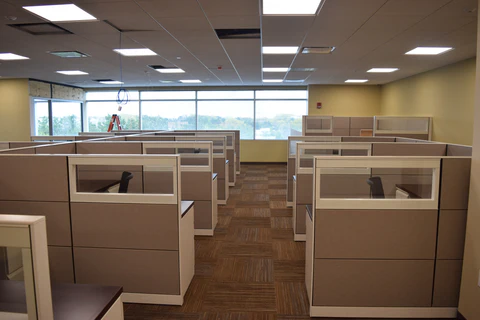
Businesses across Long Island are already seeing results. A financial firm in Melville recently converted its traditional cubicle layout into a modular workspace with movable partitions and multipurpose meeting pods. The result? A 30% increase in collaborative space and a 25% reduction in noise complaints — all without expanding their footprint.
A Nassau County medical group took a similar approach, renovating its office with modular glass walls and flexible staff areas that can adapt to changing patient flow. The practice reports faster renovations and easier maintenance, saving thousands in the long run.
The Bottom Line
The modern office is no longer static — it’s designed to move, adapt, and evolve. For Long Island businesses, modular office renovation is the key to balancing flexibility, cost efficiency, and employee satisfaction.
Whether you’re upgrading a corporate headquarters in Nassau County or remodeling a small professional office in Suffolk, modular design gives you the freedom to create a workspace that grows with your company.
Ready to Renovate?
If your workspace no longer fits the way your team works, LPS Direct can help. Our Long Island office renovation specialists design and build flexible, modular work environments that look exceptional and perform even better.
Schedule a free design consultation today and discover how a smarter, more adaptable office can transform your business.
FAQs
1. What is a modular office renovation?
A modular office renovation uses reconfigurable systems — such as movable walls, modular furniture, and flexible layouts — that can be easily adjusted as your company grows or changes. It allows Long Island businesses to update their workspaces without major construction or disruption.
2. How long does a modular office renovation take on Long Island?
Most modular office renovations take significantly less time than traditional remodels. Depending on project size, many can be completed in just a few weeks. Because modular components are pre-manufactured, installation is fast and causes minimal downtime for your team.
3. What are the main benefits of a flexible workspace?
A flexible workspace gives employees the freedom to collaborate or focus independently, supports hybrid schedules, and helps companies use square footage more efficiently. Over time, modular renovation can reduce renovation costs, improve employee satisfaction, and make future updates easier.
4. Do modular renovations require permits in Nassau or Suffolk County?
In most Long Island municipalities, modular systems such as movable walls or demountable partitions don’t require full structural permits. However, electrical or plumbing upgrades may need approval. An experienced Long Island remodeling contractor can guide you through any local requirements.
5. How much does a modular office renovation cost?
Costs vary depending on materials and layout complexity. On Long Island, smaller modular projects may start around $25–$50 per square foot, while large-scale renovations with custom finishes can exceed $100 per square foot. The key advantage is flexibility — you can reuse and reconfigure systems for future projects, saving money long term.
6. Can modular renovation improve energy efficiency?
Yes. Many modular designs integrate LED lighting, motion sensors, and efficient HVAC zoning to lower energy use. Reusing modular components also reduces construction waste, helping your Long Island business meet sustainability goals.


