




As we move into 2026, home remodeling is becoming less about dramatic transformations and more about thoughtful decisions that make daily life easier, calmer, and more flexible. The past few years reshaped how people use their homes, and those changes are now deeply influencing renovation priorities across the country.
Instead of chasing fast-moving design trends, homeowners are investing in spaces that feel intentional, adaptable, and built to last. Kitchens are becoming quieter and more functional, bathrooms are designed to support wellness, and underused areas like basements and spare rooms are being transformed into true living space. For many families, remodeling in 2026 is about future-proofing their homes — for changing work patterns, aging in place, or multigenerational living.
Here’s what’s driving remodeling decisions heading into 2026, and why these trends matter for homeowners considering a renovation.
Homes Designed for Real Life, Not Just Resale
One of the most noticeable shifts heading into 2026 is the move away from remodeling purely for resale value. While return on investment still matters, homeowners are prioritizing how spaces feel and function on a daily basis. This is especially true in established neighborhoods where families plan to stay put for the long term.
Layouts are being reconsidered with daily routines in mind. Kitchens are designed around how people actually cook and gather, rather than what photographs well. Storage is being built in intentionally, so countertops stay clear and rooms feel less cluttered. Open floor plans are still popular, but they’re being softened with subtle separations that reduce noise and visual chaos.
This trend reflects a broader mindset shift. Remodeling in 2026 is less about impressing future buyers and more about creating a home that genuinely supports the people living in it right now.
Kitchens That Feel Calm, Warm, and Purposeful
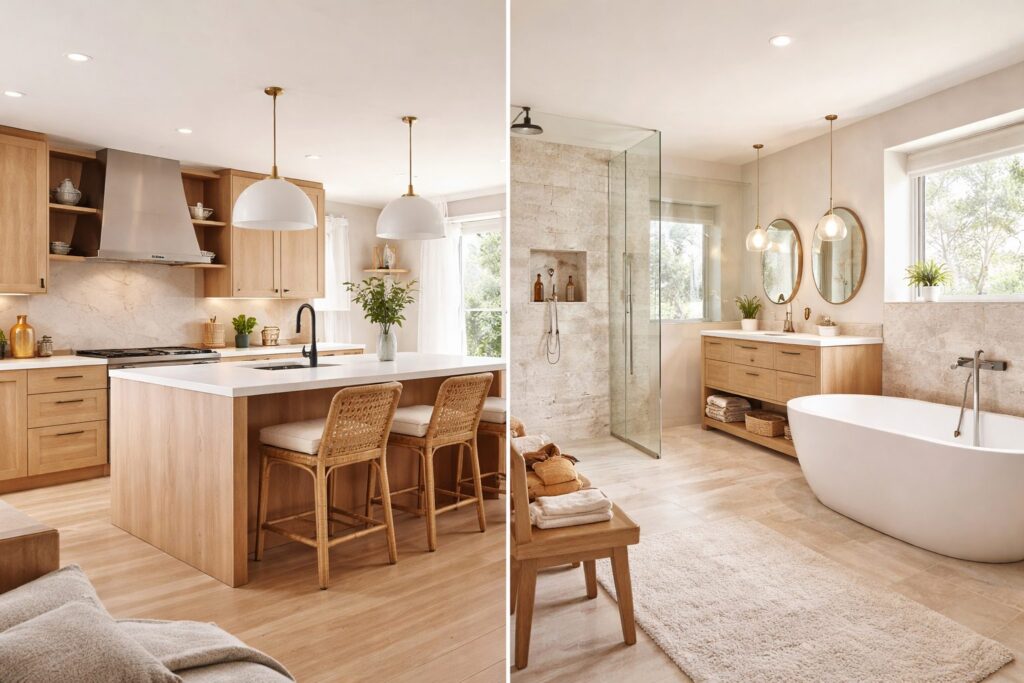
Kitchen remodeling in 2026 is taking a noticeable turn away from stark, ultra-modern designs. Homeowners are gravitating toward warmer materials, softer finishes, and layouts that feel welcoming rather than overwhelming.
Natural wood tones are making a strong return, often paired with stone countertops that have movement and texture instead of perfectly uniform surfaces. Cabinetry is trending toward understated profiles, with fewer decorative elements but more thoughtful proportions. Islands are still central, but they’re designed for everyday use — homework, casual meals, and conversation — rather than just as visual centerpieces.
Functionally, kitchens are being designed to reduce friction. Appliance placement is more intentional, lighting is layered to support different tasks, and storage solutions are customized to the household’s needs. The goal isn’t to create a showroom kitchen, but one that feels effortless to use.
Bathrooms as Wellness-Focused Spaces
In 2026, bathroom remodeling is increasingly influenced by wellness and self-care. Homeowners are treating bathrooms less like utilitarian spaces and more like personal retreats within the home.
Walk-in showers continue to replace traditional tubs, but with more attention to comfort and accessibility. Features like bench seating, built-in niches, and softer lighting are becoming standard requests. Natural materials such as stone, textured tile, and warm metals are replacing glossy, high-contrast finishes that dominated previous years.
There’s also a growing focus on creating bathrooms that will age well. Curbless showers, wider doorways, and layouts that allow for easier movement are being incorporated proactively, even when homeowners don’t need them yet. This approach allows families to enjoy a more comfortable space now while planning responsibly for the future.
The Rise of Multi-Purpose Rooms
The idea of a room serving a single purpose is quickly fading. In 2026, homeowners want flexibility built into their floor plans, especially as work-from-home and hybrid schedules remain common.
Home offices are being designed to double as guest rooms, reading spaces, or quiet retreats. Finished basements are no longer just entertainment areas — they often include work zones, fitness areas, and additional storage. Even dining rooms are being reimagined as adaptable spaces that can shift between hosting, working, and everyday living.
This trend is driving demand for smart layout planning during remodels. Instead of fixed solutions, homeowners are looking for designs that can evolve as their needs change, without requiring another major renovation down the line.
Basements and Bonus Spaces Are Getting Priority
With home prices remaining high in many regions, homeowners are choosing to improve their existing square footage rather than move. As a result, basements, garages, and bonus rooms are becoming top remodeling priorities in 2026.
Finished basements are being transformed into comfortable, well-lit living spaces that feel like a natural extension of the home. Attention is being paid to ceiling height, moisture control, and lighting, which helps these areas feel inviting rather than secondary. In many homes, basements are becoming family rooms, guest suites, or even semi-independent living areas.
This trend reflects a broader desire to maximize every inch of a home, especially in areas where adding square footage isn’t always feasible.
Remodeling with Longevity in Mind
Another defining trend for 2026 is a focus on durability and long-term value. Homeowners are more aware of the costs and disruptions associated with remodeling, and many want to make decisions they won’t regret in five or ten years.
That means choosing materials that age gracefully, layouts that remain functional over time, and designs that won’t feel dated as trends shift. Neutral foundations with personalized accents are replacing bold, trend-heavy choices that can quickly feel stale.
This approach doesn’t mean homes are boring — it means they’re designed with intention. Homeowners want spaces that feel current today and still make sense years down the line.
Frequently Asked Questions About Home Remodeling in 2026
Are home remodeling trends for 2026 focused more on design or function?
While design still matters, function is driving most remodeling decisions in 2026. Homeowners want spaces that improve daily routines, reduce stress, and adapt to changing needs. Design choices tend to support those goals rather than lead them.
Is now a good time to remodel, or should homeowners wait?
For many homeowners, remodeling in 2026 makes sense if the goal is to improve livability rather than chase market timing. Improving an existing home can be more cost-effective than moving, especially in competitive housing markets.
What rooms are homeowners remodeling most in 2026?
Kitchens, bathrooms, and basements continue to be the most popular remodeling projects. Home offices and multi-purpose rooms are also seeing increased interest as households adapt to flexible work and lifestyle needs.
Are open floor plans still popular?
Open layouts are still common, but they’re evolving. Homeowners want openness with definition, using subtle design elements to separate spaces without fully closing them off.
How can homeowners make sure their remodel won’t feel outdated quickly?
Focusing on quality materials, practical layouts, and timeless design foundations helps ensure a remodel stays relevant. Personalized finishes can always be updated later without redoing the entire space.
Final Thought
The remodeling trends shaping 2026 reflect a more mature, thoughtful approach to home improvement. Homeowners aren’t chasing the next big look — they’re investing in spaces that support how they live today and how they plan to live tomorrow.
For families considering a renovation, the most successful projects are the ones that balance comfort, flexibility, and long-term value. When done well, a remodel isn’t just an upgrade — it’s a meaningful improvement to everyday life.


