




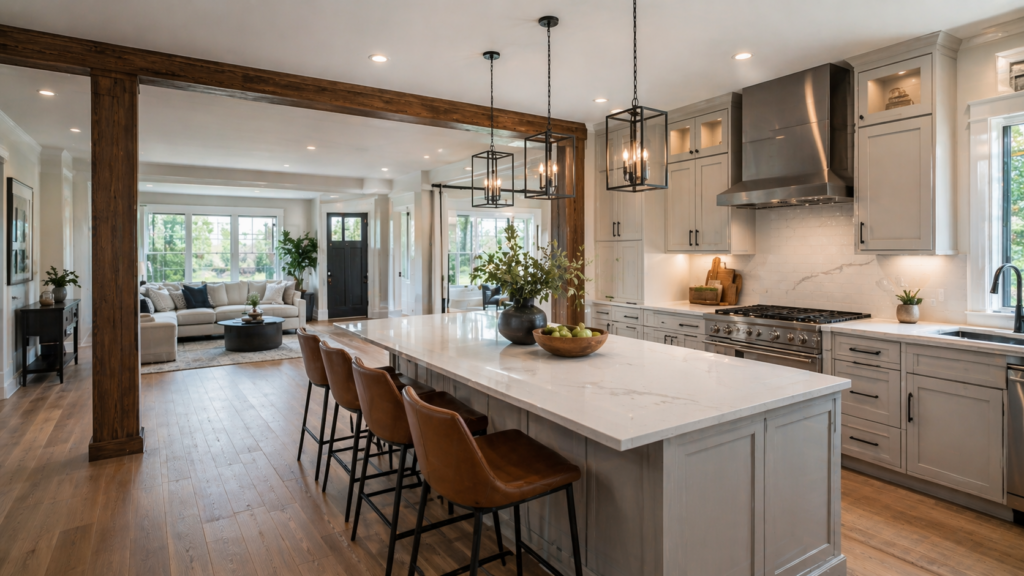
Opening Up Your Kitchen Starts with the Right Plan
Many homes across Long Island were built with kitchens that feel closed off from the rest of the house. Separate rooms were once the standard, but today most homeowners want a more open and connected layout. That often leads to one big question.
Can you remove walls in your kitchen to create an open space?
The answer is yes in many cases, but it depends on how your home was built and what changes are needed to support the structure safely. Understanding what is possible is the first step before planning a kitchen remodel on Long Island.
Many homeowners exploring these changes are already considering a full kitchen remodeling project to improve both layout and functionality.
Why Homeowners Want to Remove Kitchen Walls
In older homes, kitchens were designed for function rather than gathering. They were often tucked away behind walls with limited space to move or entertain.
Opening up a kitchen can:
- Improve flow between rooms
- Bring in more natural light
- Create space for an island or seating
- Make the home feel larger without an addition
For many homeowners, this is the difference between a kitchen that feels outdated and one that works for everyday life.
Can Any Kitchen Wall Be Removed?
Not every wall can simply be taken down. The key factor is whether the wall is load bearing.
A load-bearing wall supports the structure above it, including floors or the roof. Removing it without proper support can cause serious structural issues.
A non-load-bearing wall, on the other hand, is mainly used to divide space and is usually much easier to remove.
The challenge is that you cannot always tell the difference just by looking. This is why a contractor or engineer needs to evaluate the home before any work begins.
In many homes, especially in areas like Wantagh, these structural considerations play a major role in how a kitchen renovation is planned.
What Happens When a Load-Bearing Wall Is Removed
If a wall is load bearing, it can still often be removed, but it must be replaced with a structural support system.
This usually involves installing a beam to carry the load that the wall once supported. Depending on the home, that beam may be hidden within the ceiling or remain visible as part of the design.
In some cases, additional posts or supports are needed at the ends of the beam. This is where proper planning becomes critical, because these elements can affect both the layout and the final look of the kitchen.
According to the National Association of Home Builders, structural changes like these should always be evaluated as part of a larger remodeling plan to ensure safety, code compliance, and long-term performance.
This is often part of a larger kitchen remodeling process where layout, structure, and design are addressed together.
What to Expect During the Process
Removing a wall is not a one-day change. It is part of a larger remodeling process that includes several steps.
First, the structure is evaluated to determine what can be safely modified. Plans are then created to show how the new support system will work. Permits are typically required before construction begins.
During construction, temporary supports are installed before the wall is removed. Once the beam or new structure is in place, the area is rebuilt and finished to match the rest of the kitchen.
While this adds complexity, it also creates the opportunity to completely transform how the space functions.
Considerations for Long Island Homes
Homes across Long Island vary widely in how they are built, and that affects what is possible in a kitchen remodel.
Cape-style homes often have tighter layouts, which can limit how much space can be opened without additional changes.
Ranch homes usually offer more flexibility, making it easier to create an open layout between the kitchen and living areas, which is something we often address in kitchen remodeling projects in areas like Hicksville.
Split-level homes can be more complex due to changes in floor height and structural layout.
Because of these differences, the same idea can have very different outcomes depending on the home, which is why homeowners in places like Northport often take a more customized approach.
When Removing a Wall Makes Sense
Opening up a kitchen is not always the right move. In some homes, a full wall removal may not be necessary to improve the space.
It tends to make the most sense when:
- The kitchen feels isolated from the rest of the home
- The layout prevents efficient movement or use of space
- You are already planning a full remodel
In other cases, a partial opening or layout adjustment can achieve a similar result with less disruption.
The goal is not just to remove a wall, but to create a kitchen that functions better for how you live.
If you are already planning updates, this is often the right time to explore a full kitchen renovation rather than making smaller changes.
Related Reading
If you are also evaluating budget, you can read our guide on kitchen remodeling costs on Long Island to understand how structural changes impact pricing.
Frequently Asked Questions
How do I know if a wall in my kitchen is load bearing?
The only reliable way to know is to have a professional evaluate the structure. They will look at framing, direction of floor joists, and how the home was built.
Do I need permits to remove a wall in my kitchen?
Yes, in most cases permits are required, especially if the wall is load bearing. This ensures the work meets local building codes and is inspected properly.
How long does it take to remove a wall during a kitchen remodel?
The wall removal itself may only take a few days, but the full process including planning, permits, and finishing work can take several weeks as part of the overall remodel.
Will removing a wall increase my home’s value?
Open layouts are often more appealing to buyers, especially in older homes. While value depends on many factors, improving flow and usability can make a home more marketable.
Can you partially remove a wall instead of taking it down completely?
Yes, many homeowners choose to create a wider opening instead of removing the entire wall. This can improve flow while still maintaining some structure and separation.
Closing Thoughts
Removing a wall can completely change how your kitchen feels and functions, but it is not just about opening space. It is about doing it the right way so the result is both safe and practical.
If you are considering a kitchen remodel, understanding what is possible in your home is the first step toward creating a layout that works for you now and in the future. Get an idea of our kitchen cabinets Long Island residents prefer.


