




It’s easy to fall in love with inspiration photos. A chef’s kitchen with a 10-foot island. A spa bathroom with imported tile. Custom millwork everywhere. Heated floors. Built-ins. Statement lighting.
But before you commit to a large remodeling project, there’s one question that matters more than most homeowners realize:
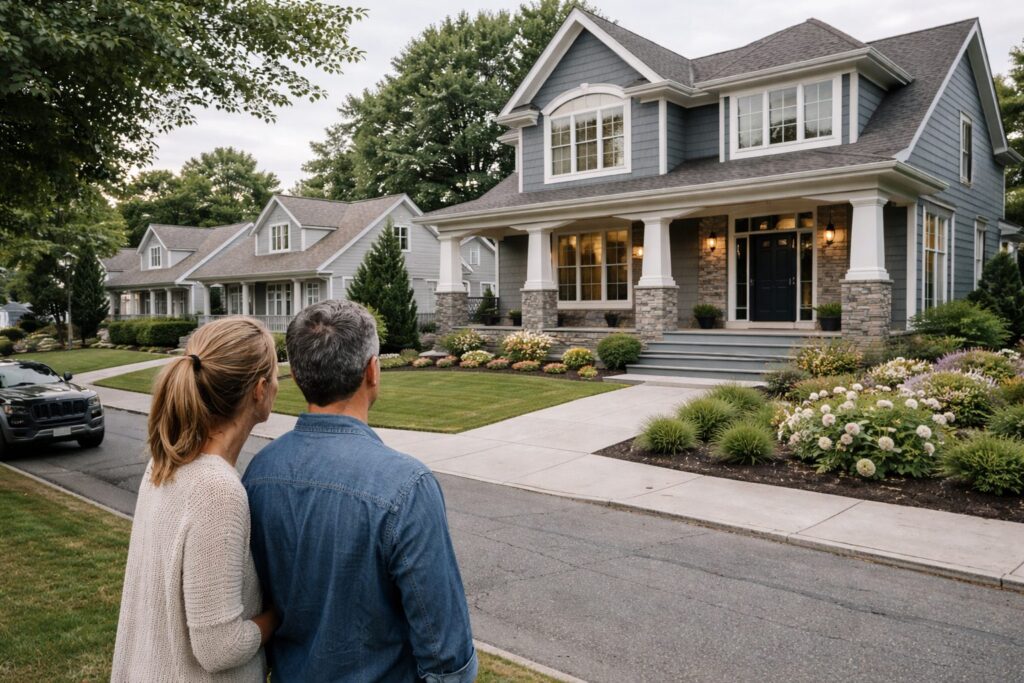
Are you upgrading your home… or upgrading it beyond what your neighborhood can support?
On Long Island, this question isn’t theoretical. Property values vary dramatically, sometimes street by street. And while improving your home should absolutely make you happier, it should also make financial sense if resale is ever part of your future.
Let’s break down how to know the difference.
What “Over-Improving” Actually Means
Over-improving doesn’t mean making your home beautiful. It means investing significantly more into renovations than the surrounding market is likely to return.
If most homes in your area sell between $650,000 and $750,000, but your renovation pushes your total investment close to $1.1 million, you’ve created a pricing gap that may not close at resale.
Buyers don’t just compare your house to itself. They compare it to everything else available within a short radius.
The market always sets the ceiling.
Why It Happens So Easily
There are a few reasons homeowners unintentionally over-improve.
First, inspiration rarely reflects neighborhood context. The images you see online often come from homes valued far above the median in your area. Materials, layouts, and customizations are designed for a different price bracket.
Second, remodeling costs on Long Island are not minor. High labor costs, permit requirements, and quality materials add up quickly. What feels like “a few upgrades” can become a six-figure project faster than expected.
Third, emotional attachment plays a role. When you love your home and plan to stay, it’s natural to prioritize comfort over comparables.
And sometimes, that’s perfectly fine.
But it should be intentional.
How to Evaluate Whether a Remodel Makes Financial Sense
The key isn’t avoiding upgrades. It’s understanding where value is created — and where it plateaus.
Look at Your Neighborhood’s Price Range
Before investing heavily, review recent sales within a close radius. Not just listing prices — actual sold prices. Pay attention to:
- Square footage
- Lot size
- Number of bedrooms and bathrooms
- Overall condition
- Updated vs. original interiors
If even the most renovated homes in your area top out at a certain price, that’s your realistic resale ceiling.
You can improve up to that ceiling. But pushing far beyond it may not translate into profit.
Understand the Difference Between Structural Improvements and Cosmetic Upgrades
Layout improvements, added bathrooms, finished basements, and functional kitchens tend to hold value more consistently than ultra-high-end finishes.
For example, opening up a closed kitchen to improve flow often increases appeal broadly. Installing imported marble from overseas in a modest neighborhood may not.
Buyers expect quality. They don’t always pay extra for luxury if the surrounding market doesn’t demand it.
Consider How Long You Plan to Stay
Time changes the equation.
If you plan to sell in two to three years, ROI matters significantly. You’re remodeling within a resale window.
If you plan to stay for fifteen years, the “return” may be lifestyle value. Comfort. Functionality. Enjoyment.
Not every remodel has to maximize profit. But you should know which goal you’re prioritizing.
Signs You May Be Approaching Over-Improvement
Sometimes the warning signs are subtle.
If your renovation budget equals 25–40% of your home’s current value, it’s worth pausing and reassessing.
If the finishes you’re selecting are significantly higher in tier than what’s typical locally, that’s another indicator.
If comparable homes with recent renovations are selling for far less than your projected total investment, that gap matters.
And if real estate agents suggest your finished home would list well above neighborhood norms, take that seriously.
The market rarely rewards being the most expensive house on the block.
When Over-Improving Might Actually Be Worth It
There are exceptions.
If you’re in a transitioning neighborhood where property values are rising quickly, strategic upgrades can position your home at the top of the market.
If you’re customizing for long-term living and don’t intend to sell anytime soon, financial return may not be your primary metric.
And if your home is already one of the larger or more desirable properties in the area, thoughtful high-quality remodeling can protect its standing.
The key word is thoughtful.
Remodeling With Awareness Instead of Assumption
The smartest remodeling decisions balance three factors:
- What improves daily life
- What the neighborhood can realistically support
- What future buyers will value
It’s rarely about cutting back entirely. It’s about allocating budget wisely.
Maybe that means investing in layout changes instead of exotic finishes.
Maybe it means choosing high-quality materials that are durable and timeless rather than trend-driven and expensive.
Maybe it means remodeling in phases instead of all at once.
A well-planned renovation should elevate your home — not isolate it from its market.
Final Thought: Build Smart, Not Just Big
Remodeling is one of the largest investments most homeowners make after purchasing their home. It deserves the same level of strategic thinking.
Before committing to major upgrades, take a step back and ask:
Is this improvement aligned with my neighborhood — or competing with it?
The answer doesn’t always mean “don’t do it.”
It simply means go in with clarity.
And clarity is what protects both your investment and your peace of mind.


