




A sudden increase in your water bill can be one of the first signs of a slab leak, even when there is no visible water inside your home. That is because a leaking pipe beneath a concrete slab can lose water into the ground or surrounding materials long before moisture reaches a place where you can see it. Depending on the location and size of the leak, it may continue unnoticed while your water meter records every gallon.
For Long Island homeowners, an unexplained water bill increase is worth investigating, especially when your household's water use has not changed.
Why Can a Slab Leak Stay Hidden?
A slab leak occurs when a water line running beneath or within a concrete slab develops a leak. Unlike a dripping faucet or leaking pipe beneath a sink, the damaged plumbing may be completely concealed. Water can escape beneath the concrete without immediately producing a puddle.
This is why the first warning signs are sometimes indirect. You may notice a higher water bill, hear water running when nothing is turned on or notice that your water heater seems to be operating more frequently.
Eventually, a larger or longer-lasting leak may produce more obvious symptoms, but homeowners should not assume that the absence of visible water means there is no leak.
How Much Can a Hidden Leak Affect Your Water Bill?
There is no single amount that indicates a slab leak. A small leak may cause a gradual increase that is easy to overlook. A larger break can create a much more noticeable jump from one billing period to the next. What matters most is whether your bill has changed without a reasonable explanation.
Think about whether anything else changed during the billing period. Did you have guests staying at the house? Did you begin watering the lawn more frequently? Did you fill a pool or use significantly more water outdoors?
If your usage patterns were normal but your water consumption increased substantially, a hidden plumbing leak becomes more likely.
Signs a Higher Water Bill Could Be Related to a Slab Leak
The water bill alone cannot tell you where a leak is located. However, several symptoms appearing together can make an under-slab plumbing problem more suspicious.
Watch for:
- The sound of running or moving water when faucets and appliances are off
- Warm or unusually hot areas on the floor
- Reduced water pressure
- A water meter that continues registering usage when no water should be running
- Flooring that becomes damp, warped or discolored
- Musty odors with no obvious source
- A water heater that seems to run more frequently than usual
- Unexplained moisture near walls, baseboards or flooring
Hot spots can be particularly noticeable when a leak develops in a hot-water line beneath the slab. Not every slab leak produces all of these symptoms. Some leaks remain surprisingly quiet and hidden for a considerable period of time.
Check Your Water Meter Before Assuming the Problem Is Under the Slab
A simple water-meter check can help determine whether water may be escaping somewhere in the plumbing system. Turn off faucets, dishwashers, washing machines, irrigation systems and other fixtures that use water. Make sure toilets are not being flushed and no one is using water inside the house. Then check the water meter.
If the meter continues showing water use when everything should be off, you may have a leak somewhere in the plumbing system. This does not prove that the leak is beneath the slab. Toilets, irrigation systems, exterior plumbing and other fixtures can also waste significant amounts of water. It does tell you that further investigation may be warranted.
Why You Shouldn't Wait for Water to Appear
Waiting for visible water can turn a relatively contained plumbing problem into a much larger repair. Water escaping beneath a slab can affect nearby flooring, walls, cabinets and other building materials if it eventually travels upward or outward. Persistent moisture can also create conditions that encourage mold or mildew.
Meanwhile, the leaking water continues adding to your utility bill. Finding the source earlier gives you more options and helps limit unnecessary water loss.
If the signs point toward plumbing beneath the concrete, professional slab leak repair begins with determining where the leak is located and evaluating the condition of the affected pipe.
How Is a Slab Leak Located?
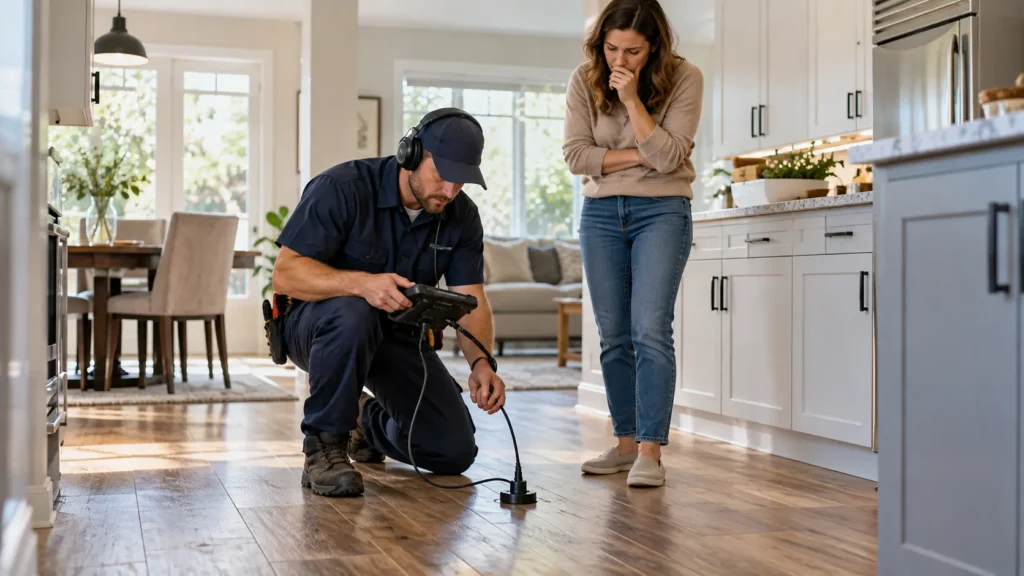
Finding a leak beneath concrete does not necessarily mean opening the floor just to search for the damaged pipe. A plumber can use diagnostic methods to narrow down the location of the leak before determining the best repair approach. The specific process depends on the home's plumbing system and the symptoms being investigated.
The goal is to identify the affected line and pinpoint the problem as accurately as possible before recommending repairs.
Once the location and cause are better understood, the plumber can determine whether accessing the damaged section, rerouting a line or addressing a larger section of aging plumbing makes the most sense.
Does Every Slab Leak Require Breaking the Floor?
No. The best repair depends on the location of the leak, the condition of the plumbing and how the home's pipes are configured.
Some leaks may be accessible through a targeted opening. In other situations, rerouting a plumbing line can make more sense than opening a finished floor.
If multiple leaks have occurred or the piping has deteriorated more broadly, repairing one isolated section may not provide the best long-term solution.
That is why identifying both the location of the leak and the condition of the surrounding plumbing is important before deciding how to repair it.
Don't Ignore an Unexplained Water Bill Increase
A higher water bill does not automatically mean you have a slab leak. Toilets, irrigation systems, faucets, appliances and other plumbing problems can all waste water.
But when the increase cannot be explained, especially when it is accompanied by running-water sounds, warm flooring, lower water pressure or unusual moisture, it deserves attention.
Finding a hidden plumbing leak before water damage becomes visible can help prevent a much larger problem.
If you suspect a leak beneath your home's slab, The Drip Detective can help locate the source and determine the appropriate repair.


