




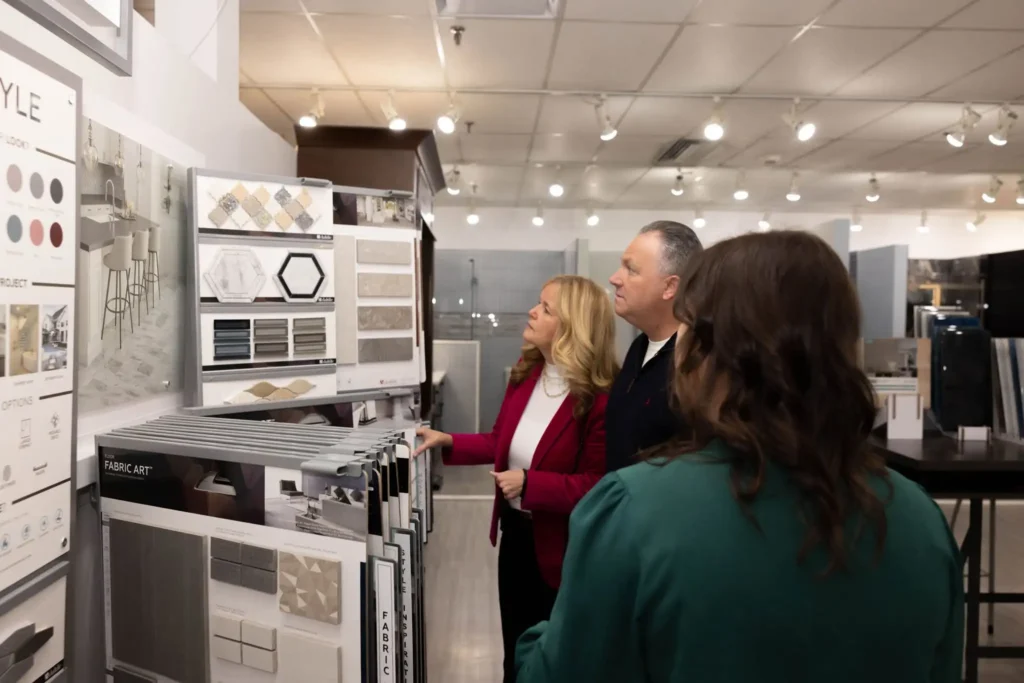
Shopping for kitchen cabinets online can be incredibly convenient. In one evening, you can look at dozens of door styles, compare colors, save inspiration photos and get a general idea of what you like. There is just one problem. Kitchen cabinets are unusually difficult to judge through a screen.
The white that looks perfect on your phone may look much warmer in your kitchen. A wood finish can appear flat online and have far more character in person. Two shaker-style doors that seem almost identical in photographs can feel completely different once you see how they are built. And then there are the things a photograph cannot show at all. How smoothly does the drawer open? How substantial does the cabinet feel? What does the finish look like when light hits it from the side? How much usable space is actually inside that pantry cabinet?
For Long Island homeowners planning a kitchen remodel, online research is useful. But there are several cabinet decisions that are worth making in person before placing an order.
Online Cabinet Shopping Is Great for the First Round of Decisions
There is no reason to avoid researching cabinets online. In fact, it can make a showroom visit much more productive. Before you go anywhere, online browsing can help you figure out whether you are drawn to contemporary, traditional, transitional or shaker cabinetry. You can save examples of kitchens you like and begin noticing patterns. Maybe nearly every kitchen you save has warm wood cabinets. Maybe you keep choosing white perimeter cabinets with a darker island. Maybe you thought you wanted an ultra-modern kitchen until you realized most of your favorite rooms actually have a softer transitional style. That information matters. The internet is excellent for narrowing the field. It is just not always the best place to make the final decision.

Cabinet Color Is One of the Hardest Things to Judge Online
Color is probably the most obvious reason to visit a kitchen cabinet showroom.
There is no single "white cabinet." One white can have a warm undertone. Another may lean cool or gray. Some have a creamy appearance. Others look very bright and crisp. The differences can be subtle until the cabinet is placed next to a countertop, floor or backsplash.
Wood tones can be even harder to evaluate online. Grain pattern, stain depth and natural variation may be much more noticeable when you see a full-size cabinet door rather than a small digital swatch. Your own screen adds another variable. Phone, tablet and computer displays can all represent the same color differently. A photograph is useful for inspiration. It should not necessarily be your final color sample.
Look at the Finish From More Than One Angle
When you see a cabinet door in person, do not simply hold it directly in front of you. Move it. Look at it from the side. Stand a few feet away. See how the surface reacts as the light changes. This can reveal characteristics that are difficult to capture in a product photo.
A painted cabinet may have a very smooth appearance or show subtle texture. A wood door may reveal grain you barely noticed online. A matte finish and a higher-sheen finish can also create very different impressions even when the underlying color is similar. If you are planning to combine cabinet colors or finishes, seeing them together becomes even more valuable. The question is not only, "Do I like this cabinet?" It is also, "Do I still like it next to everything else I am choosing?"
Open the Doors and Drawers
This is one of the simplest reasons to shop for cabinets in person, yet homeowners sometimes overlook it. Open them. Close them. Pull out the drawers. Try a deep drawer and compare it with a traditional lower cabinet. Look inside a pantry cabinet. See how a corner storage solution actually moves. Cabinet hardware and drawer systems affect how the kitchen feels every day.
A photograph can show you that a cabinet has drawers. It cannot tell you much about how those drawers operate or how substantial they feel. The same goes for pullouts, organizers and other storage features. Something that looks impressive in a photograph may not be particularly useful to you. Another feature you barely considered may make immediate sense once you try it.
See What Different Cabinet Sizes Actually Feel Like
Measurements on paper can be deceptive. A 36-inch drawer sounds like a number. Seeing one filled with pots and pans suddenly makes the storage potential much easier to understand. The same is true for tall pantry cabinets, wall cabinets and islands. Full kitchen displays give homeowners a better sense of scale. You can stand in front of an island, see how much space the cabinets occupy and imagine how the configuration might function in your own home. This becomes particularly helpful when planning kitchen cabinetry around the way your household actually lives.
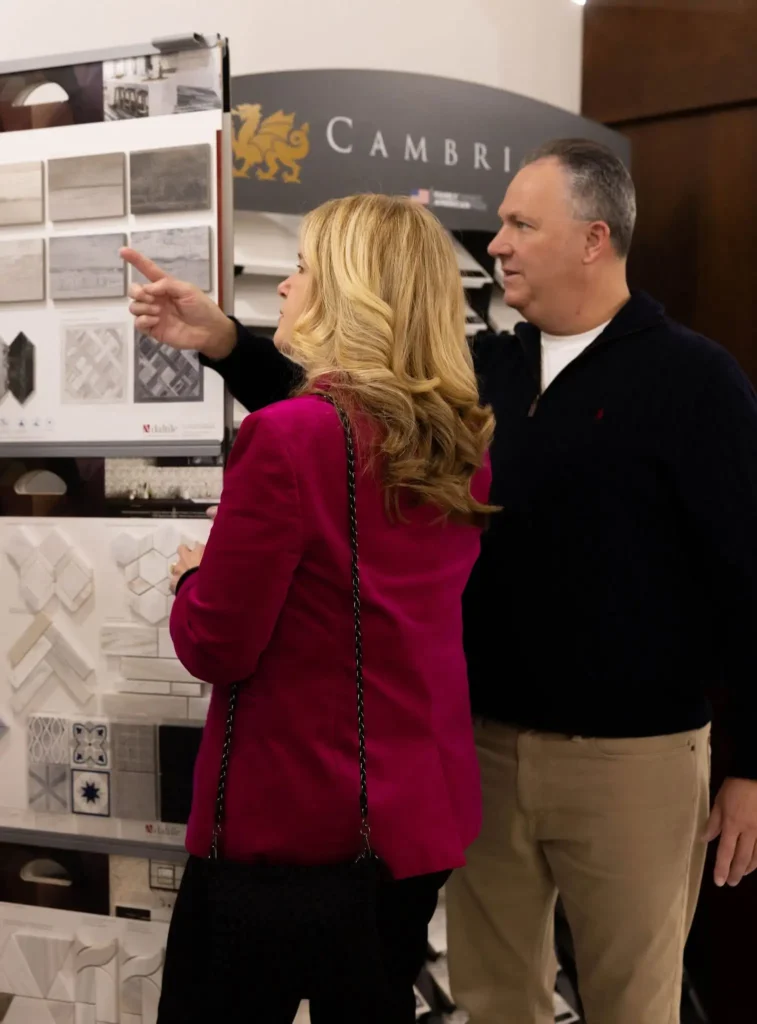
A family that cooks frequently may place more value on deep drawer storage. Someone with limited pantry space might prioritize tall cabinetry. A homeowner who dislikes countertop clutter may want places to hide small appliances. Seeing different cabinet configurations can turn abstract measurements into practical decisions.
Look Beyond the Cabinet Door
Cabinet shopping tends to begin with the door because that is the part everyone sees. But the door is only one piece. When comparing cabinetry in person, look at the cabinet box, shelves, drawer construction, hinges and interior finish. Ask what is standard and what is an upgrade.
Pay attention to details such as:
- How sturdy do the shelves feel?
- How smoothly do the drawers operate?
- Does the interior feel well finished?
- What hardware is being used?
- How are corners and edges finished?
- What storage options are available within the cabinet line?
You do not need to become a cabinet construction expert. You simply want to understand what you are buying instead of making the entire decision based on the most visible surface.
A Showroom Can Help You Catch Combinations That Do Not Quite Work
Design inspiration usually comes to homeowners one piece at a time. You find a cabinet color you love. Then a countertop. Then a floor. Then a backsplash. Individually, every selection may look beautiful. Together, they may tell a different story.
Perhaps the cabinet and countertop undertones clash. Maybe several surfaces are competing for attention. The flooring may make a wood cabinet appear more orange than you expected. A dramatic backsplash could overwhelm an already detailed cabinet door. This is one reason it helps to compare materials in the same physical space.
The goal is not simply to choose attractive products. It is to create a kitchen where those products make sense together.
Full Kitchen Displays Tell You More Than Door Samples
A cabinet door sample is useful. A full kitchen display is better. Once cabinetry is installed within an actual kitchen arrangement, you can see proportions, moldings, end panels, appliance placement, islands, hardware and storage features working together. You may notice ideas you had never searched for online because you did not know they existed.
You might realize that drawers make more sense than doors in a particular area. You may prefer cabinets that extend closer to the ceiling. A contrasting island may look better to you in person than it did in photographs. Seeing completed arrangements can also help you identify what you do not want. That is valuable information too.
The Layout Conversation Is Difficult to Replicate With a Shopping Cart
Buying cabinets is not quite the same as buying a table or an appliance. Cabinet sizes affect the entire kitchen plan. Changing the width of one cabinet can affect the next cabinet, the appliance beside it, the countertop above it and the amount of clearance in the room. That is why cabinet selection should be tied closely to the kitchen layout.
A showroom visit gives you an opportunity to talk through the room instead of considering every cabinet as an isolated purchase. Where will you keep your everyday dishes? Do you need more food storage? Would drawers work better beside the range? Is an island becoming too large for the room? Could cabinetry replace a pantry closet and free up space somewhere else? Those are design questions, not simply product questions.
Older Long Island Kitchens Can Make Cabinet Planning More Complicated
Many Long Island homeowners are remodeling kitchens in houses that have changed over decades. A kitchen may have been renovated before. Walls may have been moved. Soffits may hide mechanical systems. Floors and walls are not always perfectly level. Appliance sizes have changed. Families may want a more open layout than the home originally had. That makes it especially important to think about cabinets as part of the complete kitchen remodeling plan rather than as a collection of boxes ordered from a catalog. Sometimes the challenge is finding a better way to use the same footprint. Other times, the cabinetry has to work with a larger change involving an island, a wall opening, appliance relocation or new pantry space. The prettier cabinet is not necessarily the better cabinet if it does not work with the room.
Bring Your Online Research With You
Visiting a showroom does not mean starting the shopping process over. Bring the research. Save photos of kitchens you like. Take screenshots of cabinet colors or door styles that caught your attention. Bring measurements if you have them. If you already have flooring, countertop or backsplash samples, bring those too. The more information you provide, the easier it becomes to narrow the choices.
It is also helpful to think about what frustrates you about your current kitchen. Not enough drawers? No pantry? Too much wasted corner space? Small appliances permanently covering the counters? Trash cans sitting out? Cabinet decisions become much easier when they are solving specific problems.
What Should You Actually Decide at the Showroom?
You do not necessarily have to finalize the entire kitchen during the first visit. A productive first trip might simply help answer a few important questions:
- Which cabinet style feels right?
- Which finishes still look good in person?
- What quality level fits your expectations?
- Which storage features would genuinely improve the kitchen?
- What cabinet options work with the proposed layout?
Once those decisions become clearer, countertops, hardware, flooring, lighting and other finishes are easier to coordinate.
Online Research and Showroom Shopping Work Better Together
This does not have to be an either-or decision. Online cabinet research gives homeowners access to an enormous amount of inspiration. It helps you learn terminology, discover styles and arrive with a clearer idea of what you want. A showroom gives you the part the screen cannot. Scale. Texture. Movement. Finish. Construction. Proportion. Comparison. You get to touch the cabinets, open the drawers and see materials next to one another. The strongest approach is often to use the internet to narrow your choices and use the showroom to confirm them.
Visit the LPS Kitchen Cabinet Showroom in Farmingdale
LPS Direct helps Long Island homeowners plan cabinetry as part of the complete kitchen, not simply as a product purchase. At our kitchen cabinet showroom in Farmingdale, you can compare cabinet styles, finishes, storage features and furnished kitchen displays in person while discussing your ideas with an experienced design team.
Whether you are replacing cabinetry within your existing footprint or planning a larger kitchen renovation, seeing the options in person can make the decisions easier and help you understand how each choice fits into the finished room. The goal is not to choose cabinets that look good on a screen. It is to choose cabinets that still look and work beautifully when they are part of your home.


