




Most homeowners have at least one room in the house they complain about all the time.
The kitchen that turns dinner into an obstacle course. The bathroom with no storage. The basement that could be useful, but somehow became the place where holiday decorations go to disappear. The home office that technically exists, but still feels like a temporary setup from years ago.
At first, these rooms seem like minor annoyances. You work around them. You get used to them. You tell yourself it is not urgent.
Then one day, you realize the room is affecting your daily life more than you thought.
That is usually when homeowners say the same thing.
“We should have done this sooner.”
Home remodeling is not always about making a house look more impressive. Sometimes it is about making the spaces you already have work better for the way you actually live.
The Kitchen That Makes Every Day Harder Than It Needs to Be
A dated kitchen is easy to ignore until you start noticing how often it slows you down.
Maybe there is not enough counter space. Maybe the cabinets are poorly arranged. Maybe the refrigerator, sink, and stove feel like they were placed without much thought. Maybe everyone ends up standing in the same small area, especially during busy mornings or family gatherings.
A kitchen can look decent and still function poorly.
That is why many homeowners eventually regret waiting on kitchen remodeling. The kitchen is not just another room. It is where meals happen, conversations happen, homework happens, guests gather, and daily routines begin and end.
When the layout does not work, you feel it constantly.
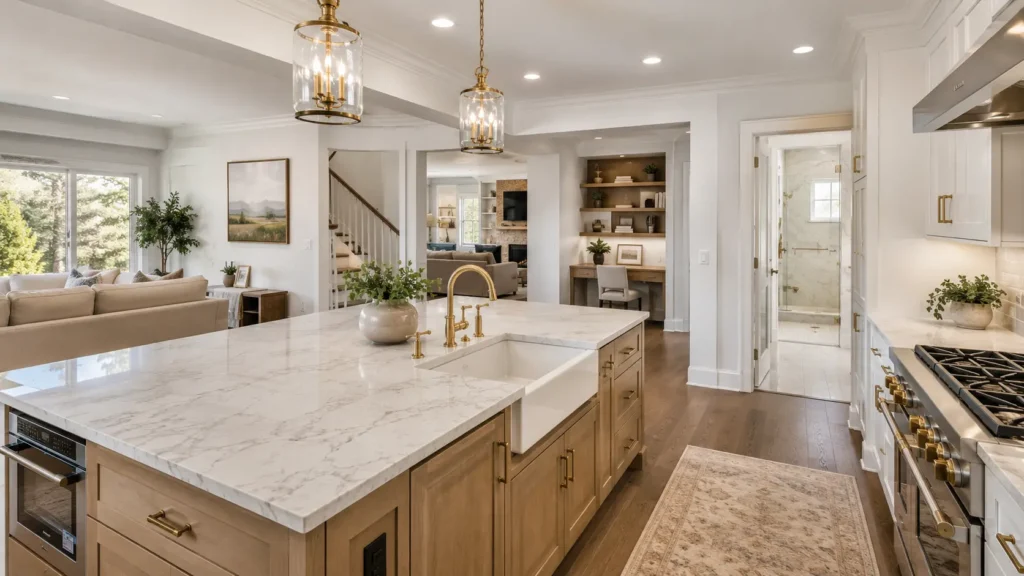
A better kitchen remodel can improve storage, traffic flow, lighting, cabinetry, counter space, seating, and the overall connection between the kitchen and nearby living areas. It can also make the home feel calmer because everything has a better place to go.
For Long Island homes, this matters even more when kitchens were built around older floor plans. Many homes were not designed for the way families use kitchens today. A remodel can help open up the room, improve function, and make the kitchen feel more connected to everyday life.
The Bathroom Everyone Uses But No One Likes
Bathrooms are easy to put off because they are usually smaller spaces. Homeowners often think, “It is just a bathroom.”
But when a bathroom is cramped, outdated, poorly lit, or lacking storage, it becomes frustrating every single day.
Small bathrooms are especially tricky. The problem is not always the square footage. Sometimes it is the vanity size, the shower door swing, the lack of recessed storage, bad lighting, poor ventilation, or a layout that wastes space.
A bathroom remodel can make a surprisingly big difference. Better lighting can make the room feel cleaner and more open. A smarter vanity can reduce clutter. A walk-in shower can make the layout feel less crowded. Updated tile, flooring, fixtures, and ventilation can make the space feel fresher and easier to maintain.
Homeowners often regret waiting because a bathroom remodel improves one of the most-used rooms in the home. It is not just about resale value. It is about starting and ending the day in a space that works.
The Basement That Could Have Been Useful Years Ago
An unfinished or underused basement can quietly become one of the biggest missed opportunities in a home.
For many Long Island homeowners, the basement is already there. It has space. It has potential. But because it is unfinished, awkward, damp-feeling, poorly lit, or used mostly for storage, it never becomes part of daily life.
That is why basement remodeling often feels like a major turning point.
A finished basement can become a family room, playroom, gym, guest area, home office, media room, hobby space, or extra storage zone. The right plan can make the home feel larger without adding onto the house.
The key is to think beyond just drywall and flooring. A basement remodel should consider lighting, moisture, layout, ceiling conditions, utility access, storage, and how the room will actually be used. Otherwise, the basement may be finished, but still not feel like a comfortable part of the home.
The regret usually comes after homeowners realize how much living space they could have been using all along.
The Home Office That Was Supposed to Be Temporary
A lot of home offices started as temporary setups. A desk in the corner. A spare bedroom with leftover furniture. A dining room table that slowly became a workstation.
Years later, the setup is still there.
The problem is that a poorly planned home office affects more than work. It can make the home feel cluttered. It can blur the line between work and personal time. It can make video calls awkward, paperwork hard to manage, and focus harder than it needs to be.
A proper home office remodel can create a space that feels intentional. That might mean built-in storage, better lighting, improved sound control, a more professional background, stronger organization, or a layout that separates work from the rest of the house.
For homeowners who work remotely, run a business, manage household responsibilities, or need a quiet study space, the home office is no longer a bonus room. It is part of how the home functions.
Waiting too long often means living with stress and clutter that could have been solved with better planning.
The Outdoor Space That Only Gets Used Sometimes
Long Island homeowners know how valuable outdoor space can be. But many backyards are not set up in a way that makes them easy to use.
Maybe there is a patio, but no real place to prep food. Maybe the grill is off to the side with no counter space. Maybe guests gather awkwardly because there is no defined outdoor cooking or dining area. Maybe the yard looks nice, but it does not support the way people actually entertain.
That is where outdoor kitchens and patio upgrades can make a big difference.
A well-planned outdoor kitchen is not just about adding a grill. It can include prep space, storage, weather-resistant materials, seating, lighting, countertops, appliances, and a better connection between the backyard and the home.
Homeowners often regret waiting because outdoor spaces are tied to lifestyle. When the backyard is easier to use, it gets used more often. Family dinners, summer gatherings, holidays, and casual nights outside all become simpler.
The Extra Room That Became a Catch-All
Almost every home has one room that lost its purpose.
It may be a spare bedroom, an enclosed porch, a den, a garage area, a basement corner, or a room that started with good intentions and slowly turned into storage. These spaces are frustrating because they technically add square footage, but they do not add much value to daily life.
A remodel can give that space a real job.
It might become a home office, guest room, playroom, workout area, craft room, mudroom, laundry area, or organized storage space. The right choice depends on what the household actually needs.
This is where homeowners should be honest. The best remodel is not always the fanciest one. It is the one that solves a problem the family feels every week.
If a room is unused, cluttered, or constantly avoided, it may be worth rethinking.
Why Homeowners Wait Too Long
Most people do not delay remodeling because they do not care about their homes. They delay because remodeling feels like a big decision.
There is budgeting to think about. Timing. Materials. Design choices. Contractors. Permits. The disruption of construction. All of that can make it easier to live with the problem for another year.
But waiting has its own cost.
A frustrating room affects routines, comfort, storage, organization, and the way a family uses the home. Over time, those small daily annoyances add up.
The goal is not to remodel every room at once. It is to identify which space is creating the most friction and start there.
How to Decide Which Room to Remodel First
The room you should remodel first is usually the one that causes the most daily frustration.
Ask yourself a few simple questions.
Which room do you complain about most often?
Which room feels the least functional?
Where does clutter keep coming back?
Which space would make the biggest difference in your routine?
Which room would make the home feel more comfortable if it finally worked better?
For some homeowners, the answer is the kitchen. For others, it is a bathroom, basement, home office, or outdoor living area.
A good remodeling plan starts with how the home is actually used. From there, design choices become much easier.
Remodeling Should Make the Home Fit Your Life Better
A home does not need to be perfect to be worth improving. In many cases, the best remodeling projects are the ones that fix the rooms homeowners have been working around for years.
The kitchen that finally has enough storage. The bathroom that no longer feels cramped. The basement that becomes real living space. The home office that helps you focus. The backyard that finally feels ready for company.
These are the projects homeowners tend to appreciate every day.
LPS Direct helps Long Island homeowners plan remodeling projects that make their homes more functional, comfortable, and connected to the way they live. From design through build and finish, the goal is to turn underused or frustrating spaces into rooms that finally make sense.
If there is a room in your home you keep putting off, it may be the one you will be happiest you finally remodeled.
FAQs
What room should I remodel first if I cannot renovate the whole house?
Start with the room that causes the most daily inconvenience. For many homeowners, that is the kitchen, bathroom, basement, or home office. A good first remodel should improve how the home functions now, not just how it looks. If the room affects your morning routine, storage, family time, work, or entertaining, it may be the best place to begin.
Is it better to remodel one room at a time or plan several rooms together?
It depends on the scope of the work. If rooms are connected by flooring, walls, plumbing, electrical work, or layout changes, it may be smarter to plan them together even if the work happens in phases. For example, a kitchen remodel may affect nearby dining or living areas, while a bathroom remodel may involve plumbing or ventilation decisions that should be reviewed early.
Why do homeowners regret waiting to remodel?
Homeowners often regret waiting because they realize the room was affecting their daily life more than they thought. Poor storage, outdated layouts, bad lighting, cramped bathrooms, unused basements, and awkward kitchens can create small frustrations every day. Once the space is remodeled, the improvement feels bigger because the home finally works better.
Can remodeling improve a home without adding square footage?
Yes. Many remodeling projects improve a home by making existing space more useful. A better kitchen layout, finished basement, organized home office, updated bathroom, or improved outdoor living area can make the home feel larger and more comfortable without changing the footprint. Good design often comes down to using the space more intelligently.
How do I know if a room needs remodeling or just decorating?
Decorating can help if the room functions well but feels outdated. Remodeling is usually the better choice when the layout, storage, lighting, materials, plumbing, traffic flow, or overall function no longer works. If a room looks better after decorating but still frustrates you every day, the issue is probably deeper than finishes.
What remodeling projects are most useful for Long Island homes?
Useful projects often include kitchen remodeling, bathroom remodeling, basement finishing, home office remodeling, garage conversions, outdoor kitchens, and layout improvements. The best choice depends on the age of the home, how the family uses the space, and what problems need to be solved first.


