




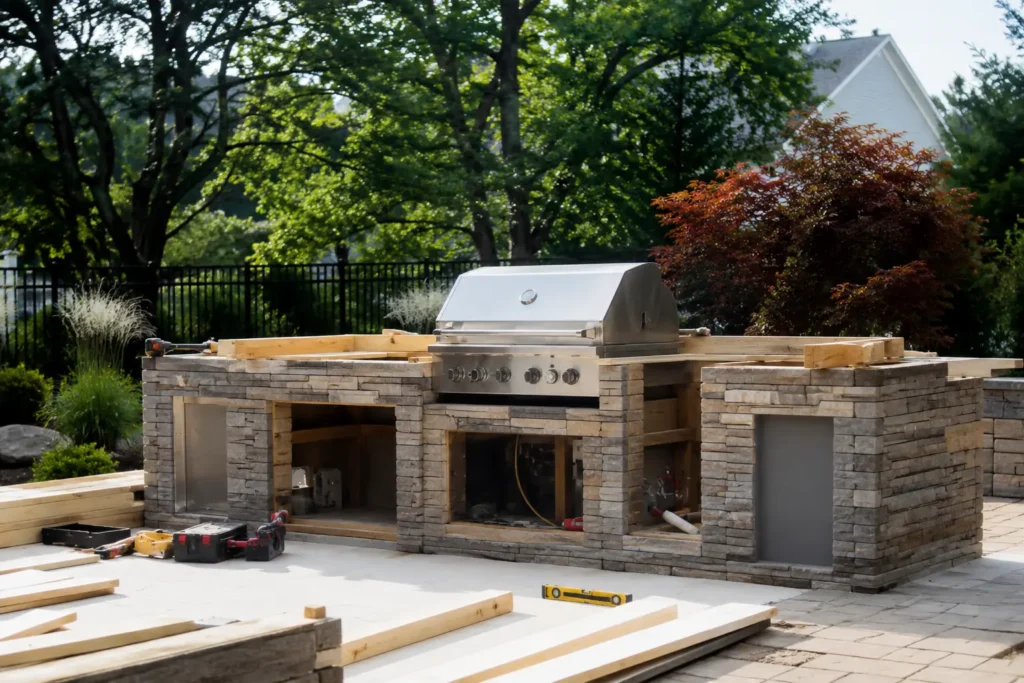
An outdoor kitchen can completely change the way you use your backyard. It gives you a real place to cook, serve, relax, and entertain without constantly walking in and out of the house. For many Long Island homeowners, it is also a way to make the backyard feel more finished and useful during the warmer months.
Before you start choosing countertops, grills, cabinets, or patio furniture, it helps to think through the project as a full outdoor living space. A good outdoor kitchen is not just about adding a grill. It needs the right layout, durable materials, safe utility planning, and a design that fits how your family actually uses the yard.
Start With How You Want to Use the Space
The best outdoor kitchens are designed around real routines. Some homeowners want a simple grill station with counter space. Others want a full backyard cooking area with a sink, refrigerator, storage, seating, lighting, and a covered structure.
Before planning the design, think about how often you entertain, how many people usually gather in your backyard, and whether the outdoor kitchen will be used mostly for family dinners, weekend parties, or holiday get-togethers. A layout that works for a quiet family dinner may not work as well if you regularly host larger groups.
It also helps to think about how close the outdoor kitchen should be to the house. A kitchen located near the indoor kitchen can make it easier to carry food, dishes, and supplies outside. A kitchen farther into the yard can create more of a destination space, but it may require more planning for utilities, lighting, walkways, and storage.
Choose Materials That Can Handle Long Island Weather
Long Island weather can be tough on outdoor materials. Between summer humidity, winter freezing, coastal air, rain, and seasonal temperature swings, an outdoor kitchen needs finishes that are made for exterior use.
Countertops, cabinets, flooring, masonry, and appliances should be selected with weather resistance in mind. Materials that look beautiful indoors may not hold up well outside. Outdoor cabinetry, stone, tile, pavers, and countertop surfaces should be chosen for durability, maintenance, and how well they handle moisture.
This is especially important for homes near the water, where salt air can speed up wear on certain metals and finishes. Even if your home is not directly on the coast, outdoor kitchens on Long Island still need to be planned for changing seasons.
Plan the Layout Around Cooking, Serving, and Seating
A good outdoor kitchen should feel easy to use. The grill, prep space, serving area, and seating should work together instead of feeling disconnected.
Homeowners often focus on the cooking area first, but counter space is just as important. You need room to place trays, season food, prep ingredients, and serve guests. Without enough surface area, the outdoor kitchen can feel cramped even if the backyard itself is large.
Seating should also be considered early. Some outdoor kitchens work best with bar seating directly at the counter. Others are better with a nearby dining table or lounge area. The goal is to make the cook feel connected to the people using the space, not separated from the gathering.
Think About Utilities Before the Design Is Final
Outdoor kitchens often involve more than a grill and a countertop. Depending on the design, the project may need gas, electric, plumbing, drainage, lighting, and appliance connections.
This is where planning matters. Running utilities after the patio, walls, or hardscape are already installed can become more complicated and expensive. If you are considering a sink, refrigerator, built-in grill, outlets, lighting, fans, heaters, or a covered structure, those details should be discussed before the layout is finalized.
Plumbing is especially important to think through carefully. Some outdoor kitchens do not need a sink, while others benefit from one. If a sink is included, drainage and winterization should be part of the conversation so the system is easier to maintain.
Check Local Requirements Before Construction Begins
Outdoor kitchen requirements can vary depending on where you live on Long Island. Town, village, and neighborhood rules may affect what you can build, where it can be placed, and whether permits are needed.
This can depend on the size of the project, whether utilities are being added, whether a roof or pergola is included, how close the kitchen is to property lines, and whether masonry, electrical, plumbing, or gas work is involved.
Because Long Island includes many different municipalities, it is smart to check local requirements before work begins. A project in Smithtown may have different considerations than one in Nassau County, Huntington, Babylon, Brookhaven, or another local area. Planning this early helps avoid delays and unexpected changes later.
Make the Space Comfortable After the Sun Goes Down
An outdoor kitchen should not only work during the middle of the day. Many homeowners use these spaces most in the evening, which makes lighting an important part of the design.
Task lighting helps with cooking and prep. Softer lighting around seating areas helps the space feel comfortable after dark. Path lighting can also improve safety when people are walking between the house, patio, and yard.
Comfort features can make the space more enjoyable too. Depending on the layout, homeowners may want a covered area, ceiling fan, heaters, shade structure, or wind protection. These details can help extend how often the outdoor kitchen is used throughout the season.
Connect the Outdoor Kitchen to the Rest of the Backyard
The outdoor kitchen should feel like part of the home, not something placed randomly in the yard. The best designs connect naturally with the patio, deck, pool area, lawn, landscaping, and indoor living space.
This is where overall planning makes a big difference. The kitchen should be positioned so it supports traffic flow, views, entertaining, and everyday use. It should also match the style of the home. A high-end outdoor kitchen should look intentional, with materials and finishes that complement the exterior of the house.
For some homeowners, the outdoor kitchen is part of a larger backyard renovation. That may include a new patio, outdoor seating area, fire feature, lighting, landscaping, or exterior home improvements. When everything is planned together, the finished space usually feels more cohesive.
Work With a Team That Understands Full Remodeling Projects
An outdoor kitchen can involve several moving parts. Design, construction, masonry, cabinetry, utilities, lighting, and finishing details all need to come together properly.
Working with a remodeling team that understands both indoor and outdoor living spaces can make the process easier. Instead of looking at the outdoor kitchen as one isolated feature, the project can be planned as part of the way the home functions overall.
LPS Direct works with Long Island homeowners on remodeling and home improvement projects from planning through completion. For homeowners considering an outdoor kitchen, the process can include layout planning, material selections, construction coordination, and the details needed to create a backyard space that is both attractive and practical.
An outdoor kitchen can be one of the most enjoyable upgrades you make to your home, but it works best when the planning goes beyond the grill. Layout, materials, utilities, permits, lighting, comfort, and long-term maintenance all matter.
For Long Island homeowners, the key is to design a space that fits the property, handles the weather, follows local requirements, and makes outdoor living easier. When the project is planned the right way, your backyard can become a more useful and inviting part of your home.
FAQs About Outdoor Kitchens on Long Island
Do outdoor kitchens need permits on Long Island?
Some outdoor kitchen projects may require permits, especially when they involve gas, electric, plumbing, masonry, structural work, or a covered feature. Requirements can vary by town or village, so it is best to check local rules before construction begins.
What is the best location for an outdoor kitchen?
The best location depends on how you use your backyard. Many homeowners prefer placing the outdoor kitchen close to the house for convenience, while others choose a location near a patio, pool, or entertaining area. The right spot should allow safe cooking, easy movement, and comfortable seating.
Can an outdoor kitchen be used year-round on Long Island?
Most outdoor kitchens on Long Island are used most often in spring, summer, and fall. With the right materials, covers, lighting, heaters, and winterization planning, the space can be protected during colder months and used for a longer part of the year.
What materials work best for an outdoor kitchen near the coast?
Weather-resistant materials are important for any outdoor kitchen, but they are especially important near coastal areas. Stainless steel appliances, durable masonry, exterior-rated cabinetry, and outdoor countertop materials can help the kitchen hold up better against moisture, humidity, and salt air.
Should I add a sink to my outdoor kitchen?
A sink can make an outdoor kitchen more convenient, especially if you entertain often. However, it also adds plumbing, drainage, and winterization considerations. Some homeowners choose a simpler layout without a sink, while others prefer the added function.
How much counter space does an outdoor kitchen need?
Counter space is one of the most important parts of an outdoor kitchen. Homeowners should plan enough room for food prep, serving trays, utensils, and guests gathering around the cooking area. A beautiful outdoor kitchen can still feel frustrating if there is not enough usable surface space.
What should be planned first, the patio or the outdoor kitchen? Ideally, the patio and outdoor kitchen should be planned together. This helps make sure the layout, utilities, seating, walkways, drainage, and materials all work as one connected backyard design


