




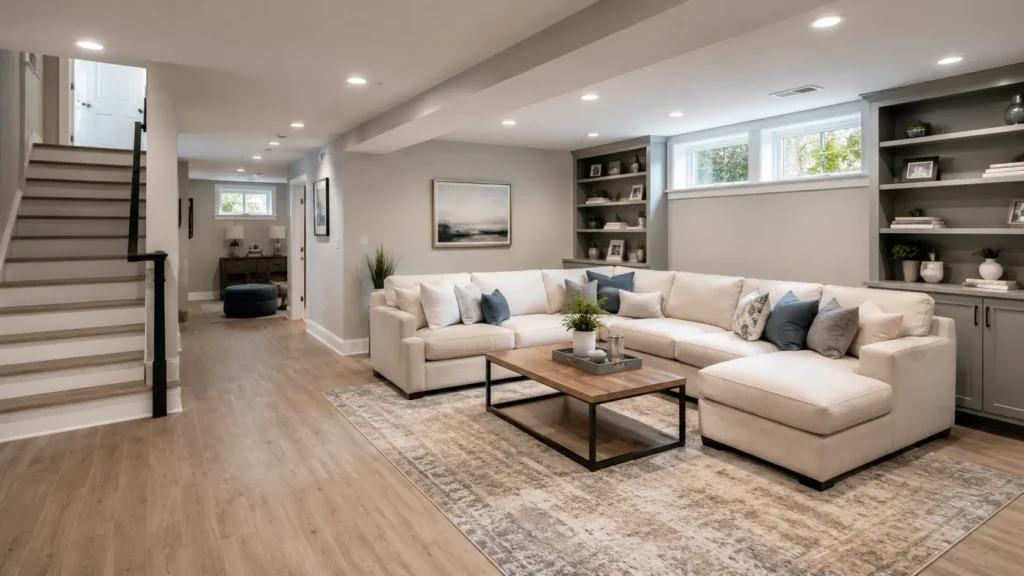
A finished basement can make a Long Island home feel much larger without changing the footprint of the house. For many homeowners, it becomes the extra living space they have needed for years. It can serve as a family room, home office, playroom, guest space, gym, hobby room, storage area, or entertainment space.
But a basement remodel is different from remodeling a kitchen, bathroom, or living room. Because the space is below grade, there are issues that need to be addressed before the finished materials go in. Moisture, permits, egress, insulation, utilities, layout, and long-term durability all matter.
That is especially true on Long Island, where many homes were built decades ago and basement conditions can vary from one neighborhood to another. Before you choose flooring, cabinetry, paint colors, or furniture, it helps to understand what should be evaluated first.
A Basement Remodel Should Start With the Condition of the Space
The first step in finishing a basement is not design. It is understanding what the basement is ready to handle.
Some basements are already clean, dry, and well-suited for finishing. Others need work before they can become a reliable living area. A basement that has had previous water intrusion, musty odors, foundation cracks, damp walls, or staining should be reviewed carefully before framing and drywall are installed.
This does not mean the basement cannot be remodeled. It means the plan needs to start with the conditions that already exist.For older homes and larger properties, basement remodeling in Garden City, NY often requires careful planning around layout, moisture control, utility access, and long-term livability.
A basement remodel should account for how water moves around the home, whether the space has enough ventilation, where mechanical systems are located, how the electrical system will support the finished space, and whether any past damage needs to be corrected. Taking care of these issues early helps protect the investment you are making in the finished basement, especially when planning a larger basement remodeling on Long Island project.
Moisture Planning Is One of the Most Important Decisions
Even if a basement looks dry, moisture should be part of the conversation. Long Island homeowners know that heavy rain, poor grading, clogged gutters, foundation cracks, and high humidity can all affect below-grade spaces.
The goal is not just to make the basement look finished. The goal is to make it comfortable and durable. That means choosing materials and construction methods that make sense for a basement environment.
For some homes, that may involve addressing water entry points. For others, it may mean choosing moisture-resistant materials, improving air movement, or planning storage areas so they do not trap humidity against walls. If there has ever been water in the basement, the remodel should be planned with that history in mind.
This is also where professional guidance matters. Covering a problem with new walls or flooring can create bigger problems later. A well-planned remodel deals with the basement as it is, not as everyone hopes it will be.
Permits and Code Requirements Should Be Discussed Early
Many homeowners think of a finished basement as an interior update, but it may still require permits. This is especially true if the project includes electrical work, plumbing, HVAC changes, a bathroom, new walls, a bedroom, or changes that make the basement into habitable space.
New York State residential code requires basements with habitable space and sleeping rooms to have proper emergency escape and rescue openings. If a basement contains sleeping rooms, each sleeping room may need its own compliant emergency opening. (ICC Digital Codes)
Local towns can also have specific plan requirements. The Town of Smithtown, for example, states that finished basement plans should show room sizes, room uses, window sizes, electrical work, plumbing work, HVAC work, smoke and carbon monoxide detectors, and wall construction details. (Smithtown NY) For homeowners, the main takeaway is simple. Do not wait until the project is halfway finished to ask whether the work needed permits. Permits, egress, smoke detectors, carbon monoxide detectors, and inspections can affect the layout and scope of the project.
The Intended Use of the Basement Changes the Entire Plan
A basement used as a casual TV room does not need the same planning as a basement guest suite. A home office has different needs than a playroom. A home gym has different needs than a bar, bathroom, or laundry area.
Before the design begins, homeowners should be clear about how the space will actually be used. This decision affects layout, storage, outlets, lighting, heating, cooling, sound control, plumbing, egress, flooring, and furniture placement.
A family room may need open space, media wiring, and built-in storage. A home office may need better sound control, strong internet access, and a professional background for video calls. A guest area may require more privacy, closet space, and careful attention to code. A bathroom addition will require plumbing access and a realistic review of where fixtures can be placed.
For homeowners planning basement remodeling in East Meadow, NY, defining the purpose of the space early can help guide the layout, lighting, storage, and finishing choices.
Storage Should Not Be an Afterthought
One common mistake in basement remodeling is turning the entire space into finished living area and forgetting where everything will go afterward.
Many Long Island homeowners use their basements for holiday decorations, tools, sports equipment, pantry overflow, luggage, seasonal clothing, and household supplies. If the remodel eliminates all of that storage, the finished basement may create clutter elsewhere in the home.
A better approach is to design storage into the project from the beginning. This can include closets, built-ins, utility room storage, under-stair storage, cabinet walls, or a dedicated unfinished section that still looks neat and intentional.
A finished basement should feel like a living space, but it should still solve real household problems. The most successful designs balance comfort with practicality.
Mechanical Systems Need to Stay Accessible
Basements often contain the systems that keep the home running. Water heaters, boilers, HVAC equipment, electrical panels, plumbing lines, sump pumps, shutoffs, and utility meters may all be located below the main living area.
A basement remodel should make the space look finished without blocking access to important systems. Utility areas need to be planned in a way that allows for service, repairs, replacement, and inspections.
This is one reason a basement remodel should not be designed only around appearance. It also needs to work for the long-term operation of the home.
A beautiful wall that blocks a shutoff valve or makes it impossible to replace equipment is not a good design. The best basement plans make access feel intentional instead of awkward.
A Finished Basement Should Match the Rest of the Home
A basement does not have to feel like a separate part of the house. When it is planned well, it can feel like a natural extension of the main living area.
That means the finishes should make sense for the home’s style. The trim, doors, flooring, wall colors, built-ins, cabinetry, and hardware should feel connected to the rest of the house, even if the basement has its own personality.
For example, a finished basement in a Massapequa home might be designed as a relaxed family lounge with storage for kids, guests, and entertaining. A basement in Huntington might be planned around a media space, gym, or guest area. A Farmingdale basement might be used as a multi-purpose family zone with practical storage and updated finishes.
The details should support how the family lives, but they should also make the home feel cohesive.
Think About Resale, Even If You Are Not Selling Soon
Most homeowners remodel for their own comfort first, but resale value should still be part of the planning process.
A basement that is dry, permitted where required, thoughtfully laid out, and finished with durable materials can make a home more appealing. Buyers often appreciate flexible space they can use as a family room, office, gym, playroom, or guest area.
On the other hand, a basement that feels cheaply finished, has visible moisture issues, lacks proper exits, or appears to have unpermitted work can raise concerns. Even if the space looks nice at first glance, buyers may question whether it was done properly.
The smartest basement remodels improve everyday life now while protecting the home’s value later.
Work With a Team That Understands Long Island Basement Remodeling
Every basement has its own conditions. Some are unfinished and open. Some are partially finished. Some have older materials that need to be removed. Some have water history. Some have awkward utility locations. Some need a better layout before they can become useful living space.
A design-build team can help homeowners make these decisions in the right order. Instead of choosing finishes first and solving problems later, the project can be planned around the actual condition of the home, the intended use of the basement, local requirements, and the way the finished space should feel.
LPS Direct helps Long Island homeowners turn underused basements into comfortable, practical spaces that fit the rest of the home. From planning and design through construction and finishing details, the goal is to create a basement that is not only attractive, but also safe, durable, and useful for everyday life.
If you are thinking about finishing or remodeling your basement, start with the right questions. What does the space need before it can be finished? How will your family use it? What permits may be required? How should storage and utilities be handled? What choices will help the basement hold up over time?
Those answers will lead to a better basement remodel.
FAQ
What should I check before finishing a basement on Long Island?
Before finishing a basement, homeowners should check for moisture, previous water damage, foundation cracks, ventilation issues, utility access, electrical capacity, plumbing needs, and possible permit requirements. The goal is to make sure the basement is ready to become usable living space before finished materials are installed.
Does every finished basement need an egress window?
Not every basement project has the same requirements, but egress becomes especially important when the basement includes habitable space or a sleeping room. New York State residential code includes emergency escape and rescue opening requirements for basements with habitable space and sleeping rooms, so this should be reviewed before the layout is finalized. (ICC Digital Codes)
Can I finish a basement that has had water before?
A basement that has had water before may still be finished, but the cause of the water issue should be addressed first. The remodel should use materials and planning methods that account for the home’s moisture history instead of simply covering up signs of past damage.
Is a finished basement considered living space?
A finished basement may be usable space, but whether it is considered legal habitable living space depends on code requirements, ceiling height, egress, ventilation, heating, permits, and local building department rules. Homeowners should confirm this before using the basement as a bedroom, apartment-style area, or primary living space.
What are the best uses for a remodeled basement?
The best use depends on the household. Many Long Island homeowners use remodeled basements as family rooms, home offices, playrooms, gyms, guest spaces, media rooms, hobby rooms, or multi-purpose storage and living areas.
Should I add a bathroom during a basement remodel?
A basement bathroom can make the space more functional, especially if the basement will be used for guests, entertaining, a gym, or a family room. However, plumbing access, layout, permits, ventilation, and budget should all be reviewed before deciding.
Why is basement remodeling different from remodeling an upstairs room?
Basements are below grade, which means moisture, air quality, utility access, code requirements, and material selection are more important. A basement remodel needs to be planned around the structure and systems of the home, not just the finished appearance.
Can a finished basement help home value on Long Island?
A finished basement can improve a home’s appeal when it adds clean, usable, flexible space. The strongest value comes from a basement that is dry, well-designed, properly planned, and finished in a way that feels connected to the rest of the home.


