




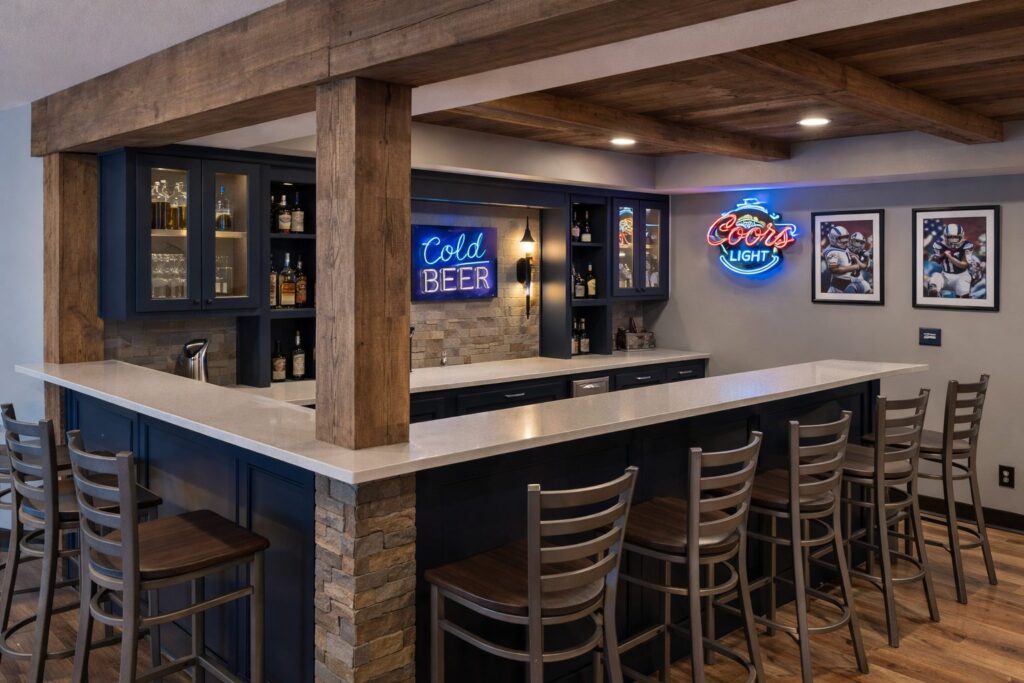
For many homeowners in Merrick, the basement represents untapped potential. It’s often the largest uninterrupted area in the house, yet it’s treated as storage simply because it wasn’t designed to feel comfortable or inviting. Basement remodeling changes that by turning underused square footage into functional living space that actually supports daily life.
A finished basement can serve many roles depending on your needs. Some homeowners want a relaxed family room that gives everyone more breathing room. Others need a quiet place to work, exercise, or pursue hobbies without competing for space upstairs. When planned correctly, a remodeled basement doesn’t feel separate from the home—it feels like it was always meant to be used this way.
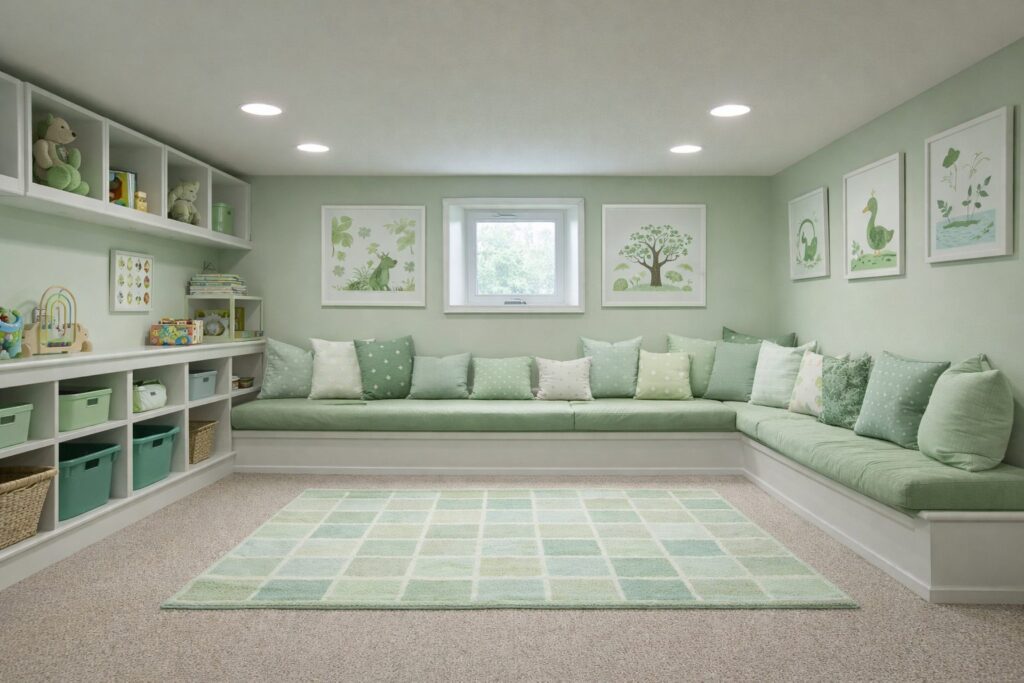
Basements in Merrick often come with specific challenges that need to be addressed before design decisions are finalized. Low ceiling heights, limited natural light, and exposed mechanical systems are common concerns, but none of them are dealbreakers when handled properly.
Instead of forcing a one-size-fits-all layout, we start by evaluating how the space currently behaves. That includes identifying where light naturally enters the basement, understanding how utilities affect ceiling height, and determining how moisture should be managed long term. Thoughtful lighting placement, smart ceiling solutions, and material choices designed for below-grade environments all contribute to a basement that feels more open, brighter, and comfortable year-round.
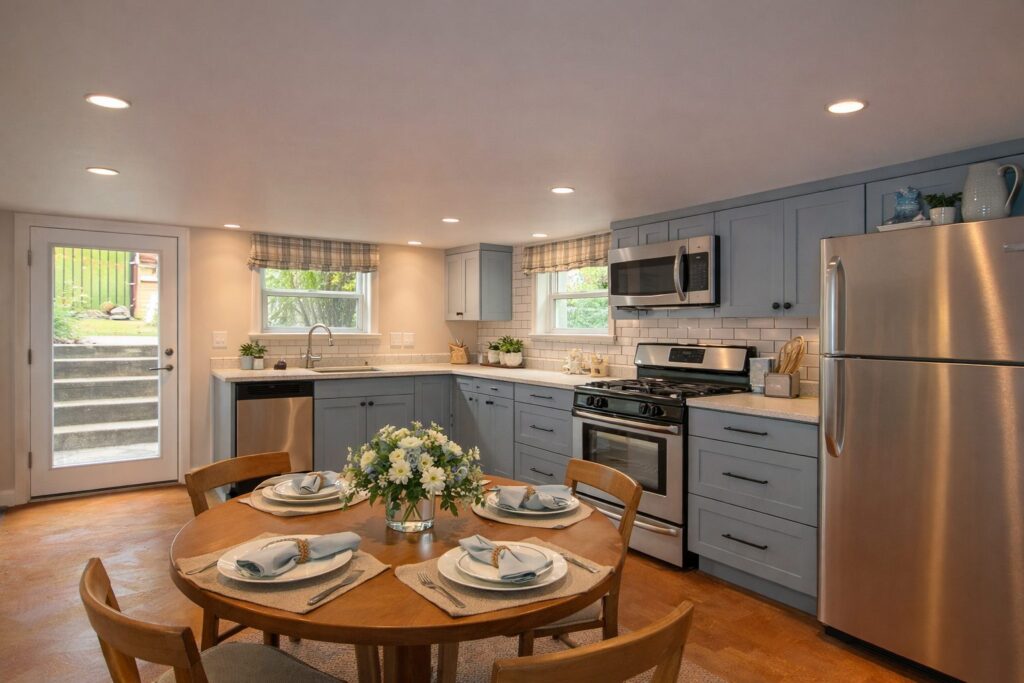
Modern basement remodeling isn’t about creating a single-purpose room. Homeowners in Merrick often want spaces that can evolve as their needs change, especially as work habits, family dynamics, and lifestyles shift.
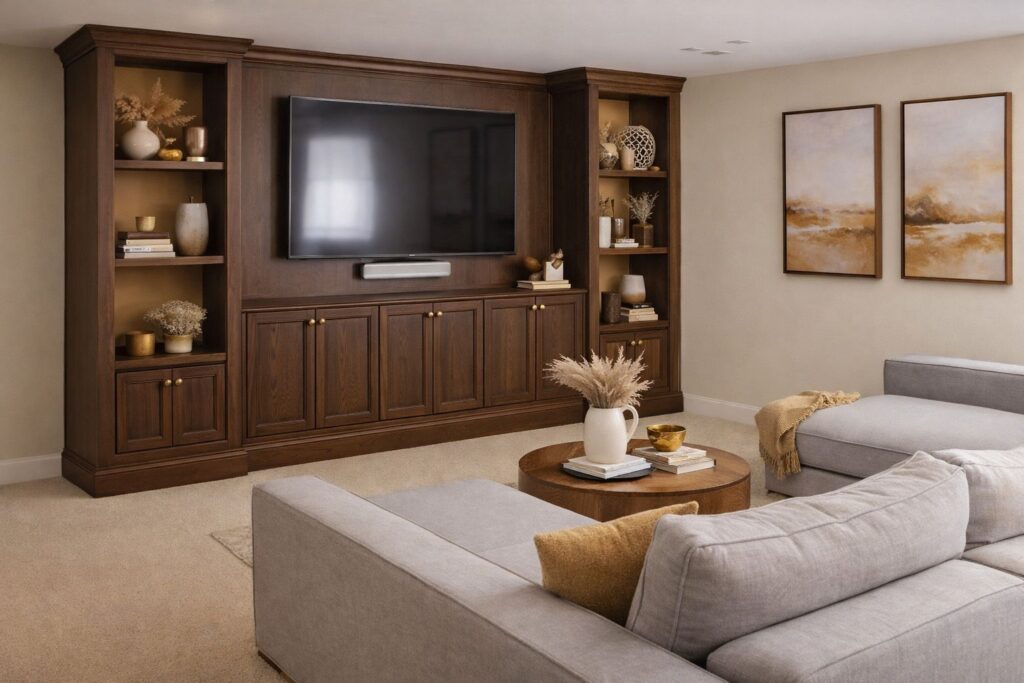
A finished basement might start as a home office or workout space and later become a media room, guest area, or teen hangout. Designing with flexibility in mind allows the space to adapt without requiring another major renovation. That means planning layouts that accommodate furniture changes, using durable flooring that can handle multiple uses, and installing lighting that works for both focused tasks and relaxed downtime.
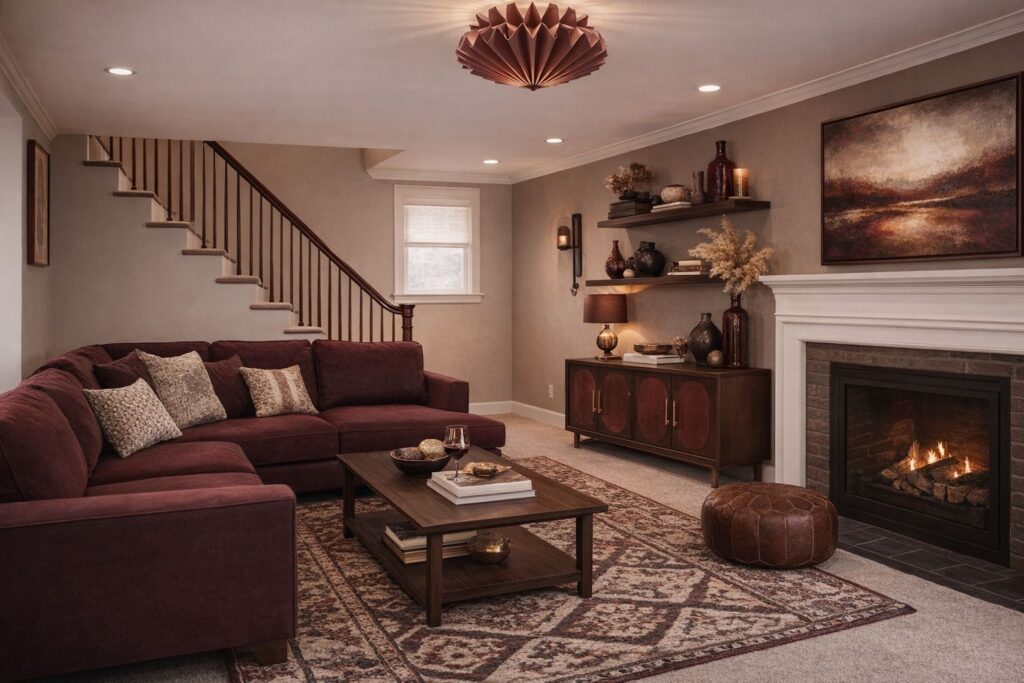
Because basements sit below grade, the construction details matter just as much as the visual design. A well-built basement remodel prioritizes comfort and longevity, not just appearance.
Proper insulation, moisture-resistant materials, and intentional airflow all play a role in how the space feels over time. Electrical and lighting plans are designed to support how the room will actually be used, whether that’s working, entertaining, or relaxing. By addressing these elements early in the process, the finished basement remains comfortable and low-maintenance rather than becoming another problem area down the road.
How can a finished basement feel brighter if there are few windows?
Lighting design makes a significant difference. Layered lighting, lighter wall finishes, and reflective surfaces can dramatically improve how bright and open a basement feels, even with limited natural light.
Is it possible to remodel a basement without lowering the floor or raising the ceiling?
Yes. In many cases, ceiling height limitations can be managed through creative layout planning, alternative ceiling designs, or strategic placement of soffits around mechanical systems.
Can a basement remodel be customized for both work and relaxation?
Absolutely. Many homeowners choose hybrid designs that include quiet zones for work alongside more relaxed areas for entertainment or family use. The key is thoughtful layout and sound control.
What makes basement materials different from the rest of the house?
Basements require materials that handle temperature fluctuations and moisture more effectively. Flooring, wall systems, and finishes are selected with below-grade conditions in mind to ensure long-term durability.
Does finishing a basement add usable living space to the home?
Yes. A properly finished basement increases functional living space without expanding the home’s footprint, making it one of the most efficient ways to improve everyday usability.

75 BROADHOLLOW RD,
FARMINGDALE, NY 11735
631.270.4488 | 212.226.1656

